


Have you ever wanted to write a congratulatory message but suddenly wondered, how do u spell congratulations?
You are not alone. “Congratulations” is a common English word, but its length and several similar-looking letters can make it surprisingly easy to misspell.
The correct spelling is Congratulations.
It is spelled:
C-O-N-G-R-A-T-U-L-A-T-I-O-N-S
Whether you are writing a wedding card, graduation message, social media post, email, or simple text message, knowing the correct spelling can help you communicate more confidently.
In this guide, we will explain how do u spell congratulations, what the word means, how to pronounce it, common spelling mistakes, how to use it in sentences, and different ways to congratulate someone.
We will also look at the difference between “congratulations,” “congratulation,” and the informal word “congrats.”
How Do U Spell Congratulations Correctly?
If you are asking how do u spell congratulations, the answer is:
Congratulations
The word contains 15 letters.
The spelling can be broken down like this:
C-O-N-G-R-A-T-U-L-A-T-I-O-N-S
A useful way to remember it is to divide the word into smaller parts:
Con + grat + u + la + tions
Another useful method is to remember the base word congratulate.
The word “congratulations” comes from “congratulate,” which means to express pleasure or praise because someone has achieved something positive.
For example:
Congratulations on your graduation!
Congratulations on your new job!
Congratulations on your wedding!
Congratulations on your achievement!
The final -s is important because the common expression is “Congratulations!”
Why Is Congratulations So Difficult to Spell?
The word “congratulations” is not necessarily difficult because of its meaning.
It is difficult because it is long and contains several groups of letters that people can easily mix up.
For example, some people accidentally write:
Congradulations
instead of:
Congratulations
The mistake usually happens because “congratulations” sounds somewhat similar to other words containing “-dulations” or because people remember the pronunciation rather than the exact spelling.
Another common mistake is leaving out a letter.
Someone may write:
Congratulions
instead of:
Congratulations
The correct spelling contains -ation- before the final s.
Therefore, when you ask how do u spell congratulations, remember that the correct form is:
Congratulations
What Does Congratulations Mean?
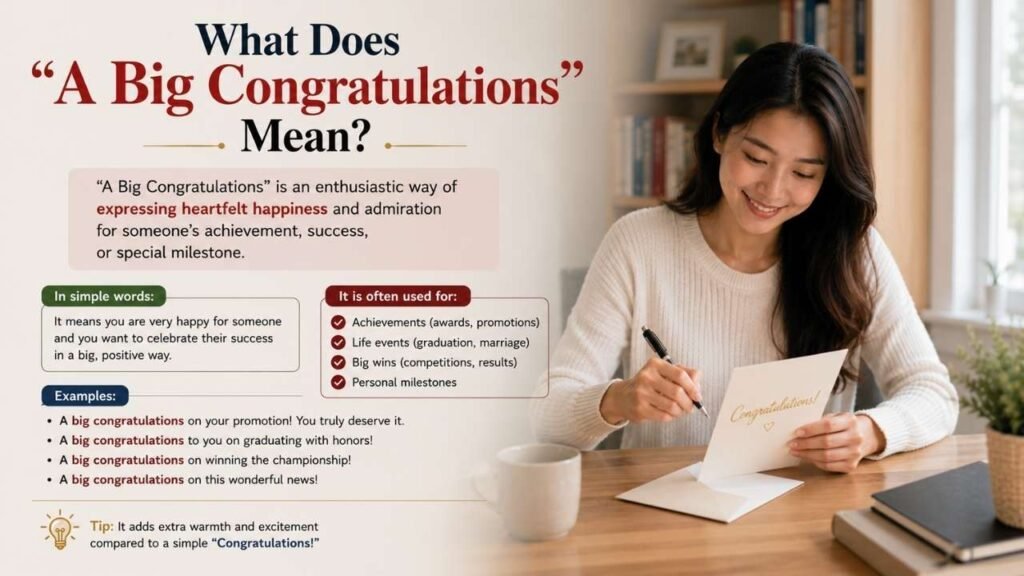
“Congratulations” is an expression used to praise someone or show happiness because something good has happened to them.
You can use it when someone achieves a goal, receives an award, gets married, graduates, gets a new job, receives a promotion, or experiences another important success.
For example:
Congratulations on passing your exam!
This means you are expressing happiness and praise because the person passed the exam.
You can also say:
Congratulations on your promotion!
This shows that you are happy about the person’s professional achievement.
The word can be used in both formal and informal situations.
How to Pronounce Congratulations
Knowing how to spell a word is useful, but knowing how to pronounce it is also important.
“Congratulations” is commonly pronounced approximately like:
kuhn-gra-chuh-LAY-shuhnz
The exact pronunciation can vary slightly depending on the speaker’s accent.
The word contains several syllables, so saying it slowly can make it easier to learn.
Try breaking it into smaller parts:
con-grat-u-la-tions
Then gradually say it faster:
Congratulations
If you are learning English, listening to native speakers pronounce the word can help you become more comfortable using it in conversations.
How to Remember the Spelling of Congratulations
If you frequently forget how to spell congratulations, there are several simple techniques you can use.
First, remember the beginning:
CONGRAT
Then remember:
ULATIONS
Put them together:
CONGRAT + ULATIONS
This gives you:
CONGRATULATIONS
Another useful technique is to remember the related verb:
Congratulate
Then change it into:
Congratulations
For example:
I congratulate you.
Congratulations!
Learning the related words together can make the spelling easier to remember.
Common Misspellings of Congratulations
Because the word is long, there are many common spelling mistakes.
One of the most common is:
Congradulations
The correct spelling is:
Congratulations
Notice that the correct word contains “grat”, not “grad.”
Another common mistake is:
Congratulions
The correct form is:
Congratulations
The letters “at” are important in the middle of the word.
Other incorrect versions may include:
Congratualtions
Congratualtions
Congradualtions
Congratulationz
These forms are incorrect in standard English.
The correct spelling remains:
Congratulations
Congratulations vs. Congratulation
A common question after asking how do u spell congratulations is whether the word should be singular or plural.
The most common expression is:
Congratulations!
For example:
Congratulations on your success!
The singular form, congratulation, exists, but it is much less common in everyday English.
When you are directly praising someone, “Congratulations!” is the natural expression.
For example:
Congratulations on your graduation!
Sounds natural.
“Congratulation on your graduation!” sounds unnatural in standard modern English.
Therefore, when you want to congratulate someone, use:
Congratulations!
Why Do We Say “Congratulations” With an S?
You may wonder why the word usually appears in the plural form.
“Congratulations” functions as an expression of praise or good wishes.
English commonly uses the plural form when congratulating someone directly.
For example:
Congratulations on your new job!
Congratulations on getting married!
Congratulations on becoming a graduate!
The final “s” is therefore an important part of the standard expression.
If you are writing a card or message, Congratulations! is the safest and most natural choice.
How to Use Congratulations in a Sentence
There are many ways to use congratulations in a sentence.
The simplest example is:
Congratulations!
You can also add the achievement after “on.”
For example:
Congratulations on your graduation!
Congratulations on your new job!
Congratulations on your promotion!
Congratulations on winning the competition!
Congratulations on completing your degree!
You can also make the message more personal.
For example:
Congratulations, Sarah! You worked incredibly hard for this achievement.
Or:
Congratulations on your success. You truly deserve it!
Congratulations for a Wedding
Weddings are one of the most common situations where people use the word congratulations.
You can write:
Congratulations on your wedding!
Congratulations to the happy couple!
Heartfelt congratulations on your marriage!
Congratulations and best wishes for your new life together!
Wishing you both a lifetime of love and happiness. Congratulations!
When writing a wedding card, you can combine congratulations with good wishes.
For example:
Congratulations on your wedding! May your life together be filled with love, laughter, happiness, and beautiful memories.
Congratulations on Graduation
Graduation is another important occasion for congratulations.
You can say:
Congratulations on your graduation!
Congratulations, graduate!
Many congratulations on this wonderful achievement!
Congratulations on completing your degree!
You worked hard, and now your achievement is here. Congratulations!
A longer graduation message could be:
Congratulations on your graduation! Your dedication and hard work have finally paid off. May this achievement be the beginning of an exciting and successful future.
Congratulations on a New Job
Getting a new job is an important milestone.
You can congratulate someone by saying:
Congratulations on your new job!
Congratulations on starting your new career!
Wishing you great success in your new position. Congratulations!
Congratulations on this exciting new opportunity!
For a professional message, you could write:
Congratulations on your new position. Wishing you continued success and many exciting opportunities in your career.
Congratulations for a Promotion
When someone receives a promotion, “Congratulations” is a natural expression to use.
Examples include:
Congratulations on your promotion!
Congratulations on your well-deserved promotion!
Many congratulations on your new position!
Congratulations! Your hard work has truly paid off.
A professional message could be:
Congratulations on your promotion. Your dedication and excellent work have earned this achievement. Wishing you continued success in your new role.
Congratulations for an Achievement
You can use congratulations for almost any meaningful achievement.
For example:
Congratulations on your amazing achievement!
Congratulations on reaching your goal!
Congratulations on your incredible success!
Congratulations! You should be very proud of yourself.
The message can be simple or detailed depending on your relationship with the person.
Is “Congrats” the Same as “Congratulations”?
Yes, “congrats” is a common informal short form of “congratulations.”
For example:
Congrats on your new job!
has essentially the same meaning as:
Congratulations on your new job!
However, the tone is different.
“Congratulations” sounds more complete and can be used in both formal and informal situations.
“Congrats” is more casual.
For example, a close friend might receive:
Congrats! You did it!
A professional colleague might receive:
Congratulations on your promotion.
Both are understandable, but the second sounds more formal.
When Should You Use Congratulations?
You can use congratulations whenever someone has achieved something positive or reached an important milestone.
Common occasions include:
-
Weddings
-
Graduations
-
New jobs
-
Promotions
-
Awards
-
Competitions
-
Academic achievements
-
Business achievements
-
Engagements
-
New babies
-
Completing a major project
-
Passing an important exam
-
Buying a new home
-
Reaching a personal goal
The key idea is that something positive has happened and you want to acknowledge it.
How to Say Congratulations Professionally
In professional situations, you may want your message to sound respectful and polished.
Here are some examples:
Congratulations on your well-deserved promotion.
Congratulations on this outstanding achievement.
Please accept my sincere congratulations on your success.
Congratulations on reaching this important milestone.
Wishing you continued success in your new role. Congratulations!
A professional congratulations message does not need to be extremely long.
A clear and sincere message is usually enough.
How to Say Congratulations to a Friend
With friends, you can use a more relaxed and personal tone.
Examples include:
Congratulations, buddy! You absolutely deserve it!
Congrats! I knew you could do it!
Congratulations! I’m so happy for you.
You did it! Congratulations!
Huge congratulations on your amazing achievement!
You can also include a personal memory or mention the effort the person made.
For example:
Congratulations! I saw how hard you worked for this, and I couldn’t be happier for you.
How to Say Congratulations to Family
Family congratulations messages can be warm and emotional.
For example:
Congratulations! We are all so proud of you.
Heartfelt congratulations on your wonderful achievement.
Congratulations! Your success has made the whole family proud.
We are incredibly happy for you. Congratulations!
A personal message can make the occasion even more meaningful.
How to Write a Congratulations Message
Writing a good congratulations message is simple if you follow a basic structure.
Start with the word:
Congratulations!
Then mention the achievement.
For example:
Congratulations on your graduation!
Next, add a positive comment.
For example:
Your hard work and dedication have truly paid off.
Finally, add a future wish.
For example:
Wishing you continued success in everything you do.
Congratulations on your graduation! Your hard work and dedication have truly paid off. Wishing you continued success in everything you do.
This structure works for many different occasions.
Short Congratulations Messages
Sometimes you only need a short message.
Here are some simple examples:
Congratulations!
Many congratulations!
Heartfelt congratulations!
Huge congratulations!
Congratulations on your success!
Congratulations on your achievement!
Congrats! Well deserved!
Congratulations! I’m so happy for you.
Congratulations and best wishes!
You did it! Congratulations!
Short messages are especially useful for text messages, comments, and social media posts.
Heartfelt Congratulations Messages
If you want your message to feel more emotional, you can add warmth and personal appreciation.
For example:
Heartfelt congratulations on your wonderful achievement. Your hard work, patience, and determination have truly paid off.
Another example is:
Congratulations! I am incredibly proud of you and everything you have accomplished. May this success lead you to even greater opportunities.
A heartfelt message does not need complicated vocabulary.
Simple and sincere words are often more powerful.
Funny Congratulations Messages
With close friends, you can make your congratulations message humorous.
For example:
Congratulations! You finally did it!
Congrats! All those late nights were worth it.
Congratulations! Now it’s time to celebrate!
You actually did it. I’m impressed! Congratulations!
Humor works best when you know the person well and understand what kind of joke they would appreciate.
Congratulations on Social Media
Social media often requires short, engaging messages.
Examples include:
Congratulations! So happy for you!
Huge congratulations on this amazing achievement!
You did it! Congratulations!
Congratulations and best wishes for your next chapter!
So proud of you. Congratulations!
You can also use hashtags if appropriate.
For example:
Congratulations on your amazing achievement! 🎉 #Congratulations #Success #Achievement
How do you spell congratulations in American English?
The spelling congratulations is standard in American English.
The same spelling is also used in British English and other major varieties of English.
Unlike some words that have different American and British spellings, “congratulations” does not normally change spelling based on the variety of English.
So you can confidently write:
Congratulations
whether you are communicating with someone in the United States, United Kingdom, Canada, Australia, or another English-speaking country.
How Do U Spell Congratulations in a Text Message?
In a text message, the correct spelling is still:
Congratulations
However, informal communication often uses:
Congrats!
For example:
Congrats on your new job!
This is perfectly understandable in casual communication.
If you are writing a formal email, official letter, greeting card, or professional message, using the complete word is generally better:
Congratulations on your achievement.
How Do U Spell Congratulations for a Card?
If you are writing a greeting card, you can simply write:
Congratulations!
You can then add a personalized message.
For example:
Congratulations on your new beginning! May this wonderful achievement bring you many more opportunities and happy moments.
For a wedding card:
Congratulations on your wedding! Wishing you both a lifetime of love, happiness, and beautiful memories together.
For graduation:
Congratulations on your graduation! May your future be filled with success, exciting opportunities, and happiness.
How Do U Spell Congratulations in an Email?
The correct spelling remains:
Congratulations
A professional email might begin:
Congratulations on your recent achievement.
You can then explain why you are happy for the person.
For example:
Congratulations on your recent promotion. Your dedication and commitment have clearly been recognized, and I wish you every success in your new role.
This style is suitable for colleagues, managers, clients, and professional contacts.
Why Correct Spelling Matters
Correct spelling matters because it makes your writing easier to understand and more professional.
A spelling mistake in a casual text message may not be a serious problem.
For another reliable reference, you can check Cambridge Dictionary. Cambridge Dictionary provides information about the meaning, pronunciation, and everyday usage of “congratulations,” making it useful for English learners and writers.
However, spelling mistakes in a business email, greeting card, application, website, or social media post can affect how readers perceive your writing.
“Congratulations” is a particularly important word because it is often used for meaningful occasions.
You want your message to communicate happiness rather than distract the reader with a spelling error.
Therefore, remembering the correct spelling can be useful.
A Simple Spelling Trick
One of the easiest ways to remember congratulations is to focus on the first part:
CONGRAT
Think:
CON + GRAT
Then add:
ULATIONS
Together:
CONGRAT + ULATIONS
Result:
CONGRATULATIONS
You can practice writing it several times.
Try writing:
Congratulations
Congratulations
Congratulations
After a little practice, the spelling will become more familiar.
Congratulations and Congratulate
Another helpful way to understand the word is to compare it with “congratulate.”
Congratulate is a verb.
Example:
I want to congratulate you on your success.
Congratulations is commonly used as an expression.
Example:
Congratulations on your success!
Both words are related, but they are used differently in sentences.
You can remember them as:
Congratulate = action
Congratulations = expression
This distinction can help English learners use both words correctly.
Examples of Congratulations in Everyday English
Here are several examples:
Congratulations on passing your test!
Congratulations on your new home!
Congratulations on your engagement!
Congratulations on your promotion!
Congratulations on winning the award!
Congratulations on completing the project!
Congratulations on your first book!
Congratulations on reaching your goal!
Congratulations on your business success!
Congratulations on your new achievement!
Each example uses “congratulations” naturally.
FAQ :
How do u spell congratulations?
The correct spelling is Congratulations.
It is spelled:
C-O-N-G-R-A-T-U-L-A-T-I-O-N-S
Is “congradulations” correct?
No.
“Congradulations” is a common misspelling.
The correct spelling is:
Congratulations
Remember the “grat” in the middle of the word.
Is congratulations singular or plural?
“Congratulations” is normally used in the plural form when expressing praise or good wishes.
For example:
Congratulations on your success!
Is “congrats” correct?
Yes.
“Congrats” is an informal abbreviation of “congratulations.”
It is common in text messages, social media, and casual conversations.
What is the correct way to write congratulations?
The standard spelling is:
Congratulations!
You can also add the reason:
Congratulations on your graduation!
How many letters are in congratulations?
“Congratulations” has 15 letters.
The letters are:
C, O, N, G, R, A, T, U, L, A, T, I, O, N, S.
How do you use congratulations in a sentence?
You can say:
Congratulations on your achievement!
You can also write:
I want to congratulate you on your success.
Can I say congratulations for a wedding?
Yes.
A natural expression is:
Congratulations on your wedding!
You can also say:
Congratulations to the happy couple!
Can I say congratulations for graduation?
Yes.
For example:
Congratulations on your graduation!
This is a very common and natural expression.
Is congratulations formal?
“Congratulations” can be both formal and informal.
The word itself is appropriate in professional situations, while the tone depends on the rest of the message.
What is the difference between congratulations and congrats?
“Congratulations” is the complete expression.
“Congrats” is the shorter, more informal version.
For formal communication, “congratulations” is generally the better choice.
Final Thoughts :
If you searched how do u spell congratulations, the most important thing to remember is simple:
Congratulations
The correct spelling is:
The word is used to express happiness, praise, and good wishes when someone achieves something positive.
You can use it for weddings, graduations, promotions, new jobs, awards, personal achievements, and many other special occasions.
If you have trouble remembering the spelling, break it into smaller parts:
You can also remember the related verb “congratulate.”
Most importantly, do not worry if the word looks difficult at first.
With a little practice, congratulations becomes much easier to spell and use.
So the next time you want to celebrate someone’s success, you can confidently write:
Congratulations!