

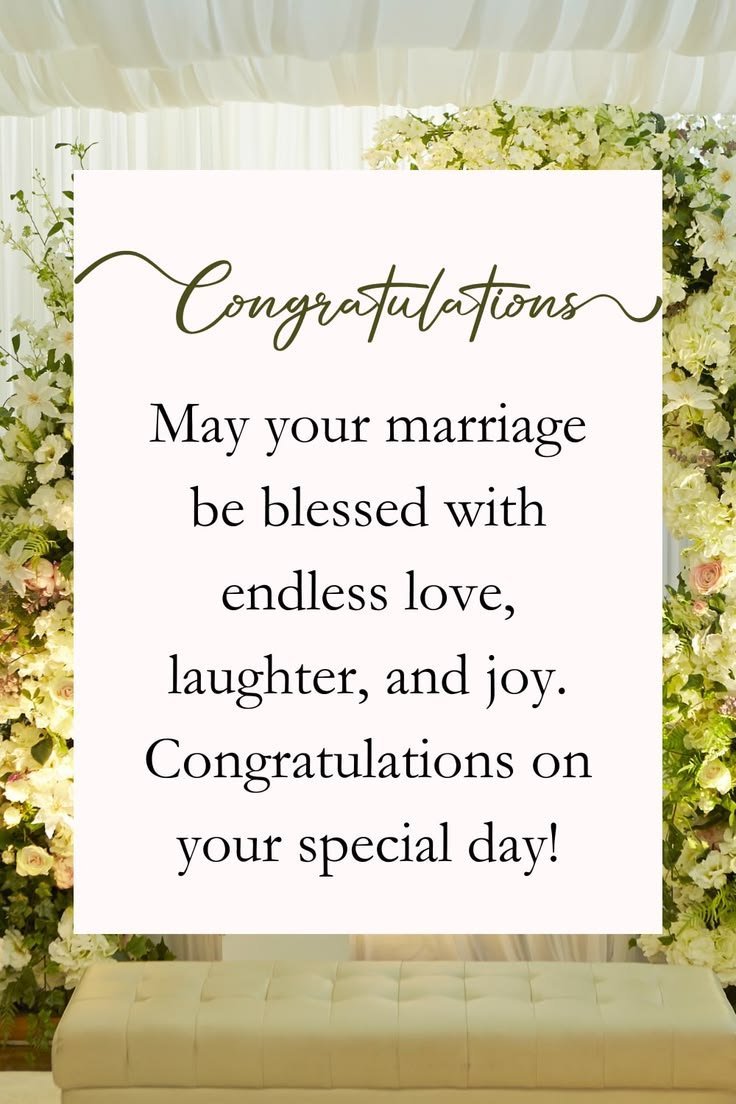
Knowing how to congratulate someone on a marriage is more than just saying “congrats” and moving on. The words you choose can become a small but lasting part of the couple’s story, something they might read again on a hard day or keep tucked inside a wedding album for years. Many people feel stuck because they worry about sounding generic, too formal, or accidentally saying the wrong thing. This guide walks you through everything you need to craft sincere, meaningful, and culturally sensitive messages that truly reflect your care for the couple, without relying on copy-paste lines.
Why Your Words Matter More Than You Think
Weddings are emotional milestones, not just social events. When you write or speak your congratulations, you are acknowledging a major life transition and offering your support for the journey ahead. A thoughtful message shows that you see the couple as individuals, not just as “the bride and groom” in a ceremony. It tells them that their happiness matters to you and that you are invested in their future together.
Research on social support shows that even small expressions of care can strengthen relationships and boost well-being during big life changes. In the context of marriage, your words can reinforce the couple’s sense of being surrounded by love and encouragement. That is why learning how to congratulate someone on a marriage in a genuine way is a skill worth developing, especially if you want your message to stand out from the sea of generic “best wishes” cards.
The Core Mindset: Sincerity Over Perfection
Before you think about specific phrases or structures, it helps to adopt the right mindset. The goal is not to write the most poetic or clever message possible. The goal is to be sincere. People can feel when a message comes from the heart, even if the grammar is simple and the vocabulary is ordinary. A short, honest note often means more than a long, flowery one that sounds like it was copied from the internet.
When you focus on sincerity, you naturally avoid common pitfalls such as overused clichés, forced humor, or advice that sounds preachy. You start thinking about what you genuinely feel for the couple and what you truly hope for them. That inner clarity makes it much easier to put words on paper, because you are no longer trying to impress anyone. You are simply sharing your real feelings respectfully and warmly.
A Simple Four-Step Structure for Any Message
Even with the best intentions, it can be hard to know where to start. A simple structure can give your thoughts a clear shape without making your message sound robotic. Think of your message as having four parts: a greeting, a core wish, a personal touch, and a warm closing. This framework works for cards, texts, social media comments, and even short speeches.
Begin with a greeting that sets the tone. If you are close to the couple, you can use their first names or a friendly phrase like “To the happy couple.” If your relationship is more formal, a respectful opening such as “Dear [Name] and [Name]” works better. The greeting does not need to be fancy. Its job is to signal that what follows is meant specifically for them.
Next comes the core wish, which is the heart of your message. This is where you acknowledge their union and express your hope for their life together. You might wish them love, patience, laughter, growth, or any combination of qualities that feel right. The key is to keep the focus on their partnership and future, not just on the wedding day itself. Marriage is a long journey, and your words should reflect that.
After the core wish, add a personal touch that makes the message uniquely yours. This could be a brief memory, a quality you admire in them as a couple, or a small observation about their relationship. Even one specific detail can transform a generic message into something meaningful. It shows that you are paying attention and that your wishes are grounded in your real connection with them.
Finally, end with a warm closing that leaves a gentle, positive impression. Phrases like “With love,” “Warmest wishes,” “Thinking of you both,” or “Cheers to your next chapter” work well in most situations. The closing does not need to be long. Its purpose is to wrap up your thoughts in a way that feels complete and caring.
Adjusting Your Tone Based on Your Relationship
One size does not fit all when it comes to congratulating someone on a marriage. The tone of your message should match your relationship with the couple. A note to your best friend will naturally sound different from a message to a distant relative, a colleague, or an elder you respect. Adjusting your tone shows emotional intelligence and helps your words land the way you intend.
For close friends, you can be warm, casual, and slightly playful if that fits your dynamic. You might reference inside jokes, shared memories, or qualities you love about their relationship. The language can be relaxed, but it should still be kind and supportive. Humor is welcome, as long as it does not undermine the significance of the occasion or make light of their commitment.
When writing to family members, especially siblings or cousins, your tone can be more emotional and future-focused. Family messages often carry a sense of pride, nostalgia, and deep care. You might reflect on how you have seen them grow, how their partner has positively influenced them, or what their happiness means to the wider family. These messages tend to be longer and more reflective, because the relationship itself is layered and long-standing.
For colleagues, acquaintances, or professional contacts, a polite and respectful tone is best. You do not need to be overly personal, but you should still be warm. Acknowledge their milestone, offer genuine good wishes, and keep the message concise. Avoid jokes that could be misinterpreted and steer clear of overly intimate language. The goal is to be friendly without overstepping boundaries.
When addressing elders or people you hold in high regard, a more formal and respectful tone is appropriate. You might use traditional blessings, honorifics, or language that reflects cultural values around marriage and family. Even in a formal message, sincerity matters more than fancy words. A simple, respectful wish delivered with genuine regard will always be appreciated.
What to Focus On: The Couple’s Partnership, Not Just the Wedding
A common mistake is to focus only on the wedding day and forget about the marriage that follows. The ceremony is one day. The marriage is a lifetime. When you think about how to congratulate someone on a marriage, shift your attention from the event to the relationship. Talk about their partnership, their growth together, and the qualities that make their bond strong.
Instead of only saying “Congratulations on your beautiful wedding,” you might say something like “May your life together be filled with the same joy you share today.” This small shift signals that you see beyond the decorations and the party. You are acknowledging the deeper commitment they are making and offering support for the everyday moments that will define their life as a married couple.
You can also highlight qualities you admire in their relationship, such as kindness, patience, humor, or mutual respect. Mentioning these traits shows that you notice what makes their connection special. It also subtly encourages them to nurture those qualities as they move forward. Your words become not just a celebration of the present, but a gentle affirmation of the future they are building together.
Cultural Sensitivity: Respecting Traditions Without Losing Your Voice
Marriage is deeply tied to culture, religion, and family traditions in many communities. When you congratulate someone on a marriage, it is important to be aware of these contexts, especially if the couple comes from a different background than you. Cultural sensitivity does not mean you have to adopt their traditions fully. It means showing respect and avoiding language that might unintentionally offend or dismiss their values.
If you know the couple follows a particular faith or cultural practice, you can incorporate appropriate blessings or phrases that align with their beliefs. For instance, in some South Asian contexts, phrases like “Aapko bahut bahut mubarak ho” or “Shubho Bibaho” carry deep meaning and warmth. In Islamic traditions, a dua for barakah and mercy in their marriage is highly valued. In Christian contexts, blessings that reference God’s grace and guidance are common. In Hindu traditions, wishes for a sacred and harmonious union resonate strongly.
At the same time, you do not need to pretend to be an expert in their culture if you are not. It is perfectly fine to keep your message simple and universal, focusing on love, respect, and happiness. If you are unsure, you can ask a mutual friend or family member for guidance on what would be appropriate. The effort to be respectful is often noticed and appreciated, even if your wording is not perfect.
Common Mistakes to Avoid When Congratulating a Couple
Even with good intentions, certain phrases and approaches can unintentionally hurt or offend. Being aware of these pitfalls helps you craft a message that feels supportive rather than awkward. The goal is not to police every word, but to avoid patterns that commonly miss the mark.
One frequent mistake is using backhanded compliments or jokes that undermine the seriousness of marriage. Comments like “Finally!” or “It took you long enough” might be meant as playful teasing, but they can also imply that the couple was somehow lacking before or that marriage is an escape from something negative. Similarly, jokes about “losing freedom” or “being trapped” reinforce outdated and unhelpful stereotypes about marriage as a burden rather than a choice.
Another common error is bringing up sensitive topics such as children, finances, or past relationships. Questions or comments like “When are you having kids?” or “I hope this one lasts” can feel intrusive and pressuring, especially on a day that is already emotionally intense. It is better to keep your focus on their happiness and partnership, without adding expectations or comparisons to other relationships.
Avoid making the message all about yourself. While it is fine to briefly mention a shared memory or how their relationship has inspired you, the spotlight should remain on the couple. Long stories about your own experiences, unsolicited advice, or reflections that center your feelings can shift the focus away from their milestone. Keep your note concise and centered on their journey.
Writing for Different Mediums: Cards, Messages, and Social Media
The medium you choose affects how your message is received. A handwritten card carries a different weight than a quick text or a social media comment. Understanding these differences helps you tailor your words so they feel appropriate and meaningful in each context.
Handwritten cards are ideal for longer, more thoughtful messages. Because the couple can keep the card as a keepsake, you have space to write a few paragraphs if you wish. This is a good opportunity to include a personal memory, a meaningful wish, and a warm closing. Take your time with the wording, and consider writing a draft before putting pen to paper. The effort of handwriting adds a layer of care that digital messages cannot fully replicate.
Text messages and instant messaging apps are better suited for shorter, more casual notes. These messages are often read quickly, sometimes amid the chaos of the wedding day. Keep your text concise, warm, and easy to read. You can still include a personal touch, but aim for two to four sentences rather than a long paragraph. Emojis can add warmth if they fit your relationship, but use them sparingly and appropriately.
Social media comments and captions require an even lighter touch. These are public spaces where many people will see your message, including distant acquaintances and family members. A short, positive comment that congratulates the couple and offers a simple wish works best here. Avoid inside jokes that might confuse others or comments that could be misinterpreted in a public setting. If you want to share a longer message, consider sending it privately instead.
The Power of Specificity: Why Details Make Your Message Memorable
Generic messages blend and are easily forgotten. Specific messages stand out and are often reread and cherished. When you learn how to congratulate someone on a marriage in a way that feels personal, specificity is your most powerful tool. Even one concrete detail can transform a standard wish into something that feels tailor-made for the couple.
Specificity can take many forms. You might mention how you first saw them together, a moment when their care for each other was especially clear, or a quality you admire in their dynamic. You could reference a shared interest, a challenge they have overcome, or a dream they have talked about. The detail does not need to be dramatic. Sometimes the smallest observations carry the most meaning.
When you include specific details, you show that you are paying attention. You signal that your wishes are not just a social obligation, but a genuine expression of care. This makes your message more memorable and more likely to be kept and revisited. It also strengthens your connection with the couple, because they feel seen and understood.
Balancing Emotion and Restraint: Finding the Right Level of Depth
It is natural to feel emotional when someone close to you gets married. You might feel joy, nostalgia, pride, or even a touch of sadness as you reflect on how much has changed. These feelings are valid, and they can enrich your message. However, it is also important to balance emotion with restraint, so your note feels supportive rather than overwhelming.
If you are very close to the couple, it is okay to express deeper emotions. You might talk about how much their happiness means to you, how you have watched their relationship grow, or how their partnership inspires you. These messages can be longer and more reflective, because the relationship itself is deep and layered. Just be mindful not to make the message so emotional that it shifts the focus away from their celebration.
If your relationship is more casual or professional, a lighter emotional tone is usually better. You can still be warm and sincere, but you do not need to delve into deep reflections or long personal stories. A few heartfelt sentences that acknowledge their milestone and offer good wishes are often enough. The key is to match the emotional depth of your message to the closeness of your relationship.
When to Give Advice and When to Hold Back
Marriage advice can be a beautiful gift when it is wanted and well-timed. However, unsolicited advice can also feel intrusive or judgmental, especially on a day when the couple is already receiving a lot of input from many people. Knowing when to offer advice and when to hold back is an important part of learning how to congratulate someone on a marriage in a thoughtful way.
Advice tends to work best when it comes from someone with a long-standing, trusted relationship with the couple, such as a parent, elder sibling, or mentor. In these cases, the advice is often expected and valued, especially if it is framed as a sharing of experience rather than a set of instructions. Phrases like “One thing we have learned is…” or “Something that has helped us is…” can make advice feel supportive rather than prescriptive.
If you are not in one of these roles, it is usually safer to focus on wishes and affirmations rather than advice. You can express confidence in their ability to navigate challenges, or highlight qualities that will serve them well, without telling them what to do. This approach respects their autonomy and avoids the risk of sounding preachy. If you feel strongly about sharing advice, consider having a private conversation at a later time, rather than including it in your public or semi-public wedding message.
Handling Complex Family Dynamics and Sensitive Situations
Not every wedding unfolds in a simple, straightforward context. Some couples navigate complex family dynamics, past conflicts, or sensitive situations that can make the day emotionally charged. As a guest or well-wisher, you may not know all the details, but you can still craft a message that is kind, inclusive, and mindful of potential tensions.
In situations where family relationships are strained, it is wise to keep your message focused on the couple themselves, rather than on extended family or broader dynamics. Avoid comments that could be interpreted as taking sides or referencing past conflicts. Stick to universal themes like love, respect, and happiness, which are unlikely to cause unintended friction.
If you know that the couple has faced significant challenges to reach this point, such as long-distance separation, cultural barriers, or personal struggles, you can acknowledge their resilience without making it the entire focus of your message. A simple line like “Your journey to this day has been inspiring, and I am so happy to celebrate with you” can honor their experience without oversharing or drawing unwanted attention. The goal is to be supportive without adding pressure or spotlighting sensitive topics.
Writing in a Multilingual or Mixed-Culture Context
In many communities, including Bangladesh, it is common for people to communicate in a mix of languages, such as English and Bangla. This can be a beautiful way to honor both your personal voice and your cultural roots. When you congratulate someone on a marriage in a multilingual context, you have the opportunity to blend languages in a way that feels natural and meaningful.
You might start your message in English and include a traditional Bangla blessing, or vice versa. For instance, you could write most of your note in English and close with “আপনাদের নতুন জীবন মঙ্গলময় হোক” or “শুভ বিবাহ” to add cultural warmth. Alternatively, you could write primarily in Bangla and include an English phrase like “Wishing you a lifetime of love and laughter” to reach a broader audience if the message will be shared publicly.
The key is to ensure that the mix feels intentional and respectful, not random or forced. If you are unsure about the correct phrasing in a particular language, it is better to keep it simple and accurate than to attempt something complex that might contain errors. The sincerity of your wish matters more than linguistic perfection, and most couples will appreciate the effort to honor their cultural background.
Making Your Message Timeless: Words That Age Well
Wedding cards and messages are often kept for years, sometimes decades. What feels trendy or clever today might not resonate in the same way five or ten years from now. If you want your message to remain meaningful over time, focus on timeless themes rather than fleeting references.
Timeless themes include love, partnership, growth, patience, kindness, and shared dreams. These are universal qualities that remain relevant regardless of changing circumstances. Avoid overly specific references to current events, temporary trends, or jokes that might lose their meaning quickly. Instead, aim for language that reflects enduring values and hopes for the couple’s long-term well-being.
You can also write in a way that allows the couple to reread your message at different stages of their marriage. A note that speaks to both the joy of the present and the challenges and growth of the future can be revisited during anniversaries, difficult times, or moments of reflection. This kind of message becomes not just a congratulation, but a small source of encouragement that grows in value over time.
The Role of Humor: When It Works and When to Skip It
Humor can add warmth and personality to your message, but it also carries risk if not used carefully. The appropriateness of humor depends on your relationship with the couple, their personalities, and the overall tone of the wedding. When done well, a light joke can make your message memorable and enjoyable to reread. When done poorly, it can undermine the significance of the occasion or unintentionally offend.
Humor works best when it is gentle, inclusive, and rooted in affection. Poking fun at shared experiences, harmless quirks, or universal truths about relationships can be endearing if it comes from a place of love. Avoid jokes that target sensitive topics, reinforce negative stereotypes about marriage, or could be interpreted as criticism. If you are unsure whether a joke will land well, it is safer to leave it out.
In formal or traditional settings, or when writing to people you do not know very well, it is usually better to skip humor altogether and focus on sincere wishes. The goal is to make the couple feel celebrated and supported, not to entertain the wider audience. When in doubt, lean toward warmth and respect rather than cleverness.
Closing Your Message with Grace and Warmth
The way you end your message leaves the final impression. A thoughtful closing can tie your words together and leave the couple with a sense of being cared for. It does not need to be long or elaborate. A simple, warm phrase is often enough to create a feeling of completeness.
Common closings include “With love,” “Warmest wishes,” “Thinking of you both,” “Cheers to your next chapter,” or “May your journey together be filled with joy.” Choose a closing that matches the tone of the rest of your message and feels authentic to your relationship. If you are writing in a multilingual context, you might close with a traditional phrase in Bangla or another language that holds meaning for you and the couple.
After your closing, you can add your name or a short signature, especially in handwritten cards. This personalizes the message and makes it clear who it is from. In digital messages, your name might already be visible, but adding a small sign-off can still create a sense of closure and intentionality.
For broader information about marriage and family relationships, American Association for Marriage and Family Therapy offers professional resources and educational information. These resources can help newlyweds understand the importance of communication, trust, respect, emotional connection, and working together as they begin their married life.
FAQ
What is the best advice for newlyweds?
The best advice for newlyweds is to communicate openly, respect each other, and never stop making time for one another. Marriage becomes stronger when both partners listen, forgive, support each other, and work together through both happy and difficult moments. Remember that a successful marriage is built through patience, trust, kindness, and mutual understanding.
How to say congratulations uniquely?
You can uniquely say congratulations by making your message personal and heartfelt. Instead of using only traditional words, mention the couple’s happiness, new journey, or future together. A warm message that expresses genuine excitement for their marriage can feel much more meaningful than a simple “Congratulations.”
What is the best marriage advice in just five words?
One of the best five-word pieces of marriage advice is: “Love deeply, listen, forgive, grow.” These five words capture some of the most important parts of a lasting relationship. Love creates connection, listening builds understanding, forgiveness helps overcome mistakes, and growing together keeps the relationship strong over time.
What are the top 10 wedding wishes?
Some of the most meaningful wedding wishes include wishes for lifelong love, happiness, peace, understanding, good health, prosperity, and beautiful memories together. You can also wish the newlyweds a future filled with laughter, mutual support, and countless wonderful moments. The best wedding wishes are sincere and reflect your genuine happiness for the couple.
What are some unique marriage wishes?
Unique marriage wishes can focus on the couple’s journey, shared dreams, and future happiness. You might wish them a lifetime of unforgettable memories, a home filled with laughter, and a relationship that becomes stronger with every passing year. A personalized wish that reflects the couple’s personality often feels more special than a common wedding greeting.
How to bless a new marriage?
To bless a new marriage, express heartfelt wishes for love, peace, happiness, health, and lifelong companionship. You can ask for blessings upon the couple’s new journey and wish that their home remains filled with kindness, understanding, and joy. A sincere blessing should celebrate their commitment while wishing them strength and happiness throughout their married life.
Final Thoughts:
Learning how to congratulate someone on a marriage is ultimately about turning your good intentions into words that feel real and supportive. It is not about finding the perfect phrase or impressing anyone with your vocabulary. It is about showing up with care, respect, and sincerity, and offering your genuine wishes for the couple’s happiness.
When you approach your message with this mindset, the structure, tone, and wording become easier to navigate. You can adapt your words to different relationships, cultures, and mediums without losing the core of what you want to say. You can avoid common pitfalls and focus on what truly matters: affirming the couple’s love, honoring their commitment, and expressing your support for their journey ahead.
In the end, the most memorable messages are often the simplest ones that come from the heart. They are the notes that make the couple feel seen, valued, and encouraged. As you write your own congratulations, remember that your sincerity is your greatest strength. Trust that, and your words will naturally find the right shape and tone to celebrate this beautiful milestone in their lives.