

When writing a professional email, even a short sign-off can raise questions about grammar, capitalization, and punctuation. One of the most common questions people ask is, do you capitalize best regards? The answer is straightforward, but understanding why the phrase is written that way can help you feel more confident when ending professional messages.
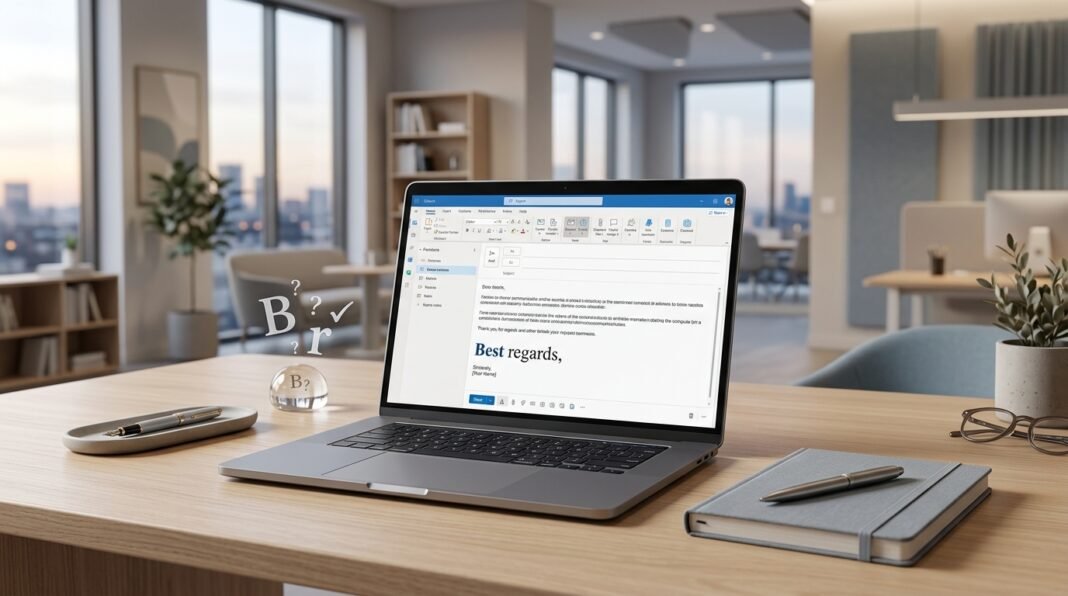
The standard form is “Best regards,” with a capital B in “Best” and a lowercase r in “regards.” A comma is also commonly placed after the phrase when it is used as an email closing. This format is widely accepted in professional correspondence and works well across many workplace situations. Although “Best Regards” is often seen in emails, capitalizing both words is generally unnecessary because “Best regards” is not a title. It functions as a complimentary closing, so it normally follows sentence-style capitalization rather than title-style capitalization.
Understanding this small distinction can make your emails look more polished and consistent. Email communication is often judged quickly, and details such as capitalization, punctuation, spacing, and tone can influence how professional a message appears. Knowing how to correctly use Best regards allows you to finish your emails naturally without overthinking the closing.
Do You Capitalize Best Regards?
If you are wondering do you capitalize best regards, the standard answer is yes, but only the first word should normally be capitalized. The preferred form is Best regards, not Best Regards. The word “Best” begins with a capital letter because it is the first word of the complimentary closing. The word “regards” remains lowercase because it is the second word and is not a proper noun. This follows the common sentence-style capitalization used for many email closings.
The same principle applies to many other professional sign-offs. When a closing consists of multiple words, the first word is generally capitalized while the remaining words are lowercase unless a particular word requires capitalization for another grammatical reason. Using Best regards therefore follows a simple and familiar writing convention. It looks professional without appearing overly formal or stylized. While capitalization preferences can vary between organizations and individual style guides, sentence-style capitalization is a safe and widely accepted choice.
Writing Best Regards with both words capitalized is not necessarily incomprehensible or disastrous. Readers will understand the meaning immediately. However, it can look like title capitalization, which is usually not necessary for an email sign-off. For professional writing, consistency is often more important than trying to make every word look prominent. A clean and conventional closing makes your email easier to read and helps maintain a polished appearance.
What Is the Correct Way to Write Best Regards?
The standard professional form is Best regards, followed by your name or email signature. The first word begins with a capital letter, the second word remains lowercase, and a comma is commonly placed at the end. The closing normally appears after the final paragraph of your email. It is separated from the main body of the message and followed by the sender’s name. This creates a clear visual distinction between the content of the email and the sign-off.
The capitalization of Best regards is based on normal sentence-style conventions. “Best” is capitalized because it begins the closing, while “regards” is lowercase because it is not a proper noun and does not need an initial capital.
The comma is also an important part of the traditional format. Although digital communication has made punctuation more flexible, including a comma remains a conventional choice in professional correspondence. It provides a natural pause between the closing and the sender’s name. The most important thing is to maintain consistency. If you use sentence-style capitalization throughout your email, using the same approach in your closing creates a cohesive writing style.
Is “Best Regards” Grammatically Correct?
The phrase “Best Regards” is understandable and commonly used, but capitalization is a matter of writing style rather than a question of whether the phrase itself is grammatically meaningful.“Best regards” is a conventional complimentary closing. It expresses goodwill toward the recipient without being excessively personal or overly formal. The phrase has become a standard part of professional correspondence, especially in email.
The issue with writing Best Regards is primarily stylistic. Capitalizing both words makes the phrase resemble a title or heading. In normal sentence-style capitalization, only the first word receives an initial capital unless another word is a proper noun. Because “regards” is an ordinary common noun, it does not normally require capitalization. Therefore, Best regards is the cleaner and more conventional form.
It is worth remembering that capitalization conventions can differ among organizations, countries, industries, and individual writers. Some people intentionally capitalize both words in email signatures because they prefer the visual appearance. That does not mean the reader will misunderstand the message. However, if your goal is to follow a broadly accepted professional writing convention, Best regards is a dependable choice.
Should You Put a Comma After Best Regards?
A comma is traditionally placed after Best regards when it is used as a complimentary closing. This is a common convention in business correspondence and professional emails.
The punctuation helps separate the closing phrase from the sender’s name. It also reflects traditional letter-writing conventions that have carried over into modern electronic communication. Some modern email writers omit punctuation from sign-offs altogether, particularly when their messages are very informal or when their workplace follows a minimalist style. Nevertheless, using a comma remains a conventional and professional choice.
The key point is that capitalization and punctuation serve different purposes. The capitalization question is answered by writing Best regards, while the punctuation convention is usually Best regards. If you are writing an important professional email and are unsure which style to use, the conventional form is generally the safest. It is familiar, readable, and unlikely to appear unusual to the recipient.
Best Regards vs. Best regards
The difference between Best Regards and Best regards is simply capitalization, but that small difference can affect the visual style of a professional email. Best regards follows sentence-style capitalization. The first word is capitalized and the second word is lowercase. This is the standard form used by many professional writers.
Best Regards uses capitalization on both words. This resembles title-style capitalization, where major words in titles and headings often begin with capital letters. Because an email sign-off is not normally a title, sentence-style capitalization is generally more appropriate. This is why Best regards is often preferred in professional correspondence.
Neither version prevents the recipient from understanding your message. The difference is primarily about convention, consistency, and presentation. When writing professional communication, small details can contribute to an overall impression of care. A consistent capitalization style shows that you are paying attention to the way your message is presented.
Is Best Regards Formal or Professional?
Best regards is generally considered professional and moderately formal. It is formal enough for many workplace situations while still sounding friendly and approachable.
The phrase does not usually create the distance associated with highly traditional letter closings. At the same time, it is more professional than extremely casual sign-offs. Its flexibility is one reason it is so common in workplace emails. It can work when communicating with colleagues, clients, customers, managers, recruiters, business contacts, and professional acquaintances.
The tone of the closing also depends on the rest of the email. A polite and thoughtfully written message ending with Best regards usually feels professional because the closing supports the overall tone rather than determining it on its own. A professional email should therefore be considered as a complete piece of communication. Greeting, wording, paragraph structure, punctuation, closing, and signature should work together.
When Should You Use Best Regards?
Best regards can be used in many professional communication situations. It is particularly suitable when you want to maintain a respectful tone without sounding excessively formal. It works well in workplace correspondence because it does not assume a highly personal relationship with the recipient. The phrase communicates goodwill while maintaining an appropriate professional distance.
It can also be useful when communicating with someone you know professionally but do not know personally. In such circumstances, an overly warm sign-off may feel inappropriate, while an extremely formal closing may sound unnecessarily distant. The phrase can also work well in ongoing business communication. Once you have established a professional relationship with someone, Best regards can provide a consistent and familiar way to end your messages.
For job-related correspondence, it is also a commonly accepted closing. Professional communication with recruiters, hiring managers, colleagues, or organizations often benefits from a neutral and polished sign-off. The phrase is versatile because it does not strongly communicate either extreme formality or casual friendliness. Instead, it occupies a comfortable middle ground.
When Should You Avoid Best Regards?
Although Best regards is versatile, it is not necessarily the ideal closing for every message.
Highly formal correspondence may call for a more traditional closing depending on the relationship between the sender and recipient and the purpose of the communication. Formal legal, governmental, academic, or institutional correspondence may follow specific conventions. At the opposite end of the spectrum, very casual communication may not require a formal complimentary closing at all. Messages between close friends or familiar colleagues can use much more relaxed communication styles.
The relationship between the sender and recipient matters. A sign-off should match the tone of the conversation, the purpose of the message, and the level of familiarity. It is also important to consider organizational style. Some companies encourage specific email signatures or preferred closing phrases. If your workplace has an established communication style, following it can be more appropriate than relying on a general convention.
Best Regards Capitalization in Email Sign-Offs
Email sign-offs are small parts of a message, but they contribute to the overall structure of professional communication. A well-formatted closing should be easy to identify and visually separated from the main body. The first word in Best regards is capitalized. The second word is lowercase. A comma is normally placed after the phrase, and the sender’s name appears below it.
This formatting is simple because it follows familiar conventions. Readers do not need to interpret unusual capitalization or punctuation. Consistency also matters when creating an email signature. If your email platform automatically inserts a signature, make sure the closing and signature do not create unnecessary repetition.
A professional signature can contain relevant contact information, job information, or other appropriate details. The sign-off itself should remain concise. The goal is not to make the closing visually complicated. A simple Best regards followed by your name is often enough.
Common Mistakes With Best Regards
One of the most common mistakes is capitalizing both words as Best Regards. While this form is widely recognizable, sentence-style capitalization generally favors Best regards. Another mistake is writing the entire phrase in lowercase as best regards. This can appear overly casual or inconsistent with normal capitalization conventions at the beginning of a closing.
Some writers also forget punctuation entirely. While punctuation can be flexible in digital communication, a comma after the closing remains a conventional professional choice. Another issue is inconsistent formatting. If the rest of your email follows careful professional writing conventions but the closing uses unusual capitalization, the message may look less polished.
Writers sometimes also use a closing that does not match the tone of the message. Even though Best regards is broadly appropriate, the most effective sign-off depends on context. Finally, some people overthink the closing and repeatedly change it between messages. A consistent, professional sign-off can make communication easier and more natural.
How to Capitalize Other Email Sign-Offs
The capitalization principle used with Best regards also applies to many other email closings. When a complimentary closing contains more than one word, sentence-style capitalization commonly capitalizes the first word and keeps subsequent ordinary words lowercase.
This approach helps maintain a consistent visual style across professional correspondence. It also avoids making a closing look like a heading. Words that are proper nouns would still follow their own capitalization rules. However, ordinary words in a complimentary closing generally do not need unnecessary capital letters.
Understanding this pattern makes it easier to handle different professional sign-offs without memorizing a separate rule for every phrase. The important thing is to distinguish between a sentence-style closing and a title or heading. Email sign-offs generally function as complimentary closings rather than titles.
Does Best Regards Need a Capital B and R?
If you are specifically asking, do you capitalize best regards, the standard answer is that the B should be capitalized and the R should normally remain lowercase.
The preferred form is Best regards. The capital B signals the beginning of the closing phrase. The lowercase r follows ordinary sentence-style capitalization because “regards” is not a proper noun.
This simple rule is easy to remember. When you use the phrase as a professional email closing, capitalize the first word, leave the second word lowercase, and normally add a comma. The form Best Regards is not likely to confuse, but it uses a different capitalization style. If you want your professional emails to follow conventional sentence-style capitalization, Best regards is the better choice.
Best Regards in Professional Email Etiquette
Professional email etiquette is not limited to grammar. It includes clarity, tone, formatting, responsiveness, and consideration for the recipient. A closing such as Best regards contributes to this overall etiquette because it provides a respectful ending to the communication.
The phrase is particularly useful when you want to remain courteous without sounding overly familiar. It can communicate goodwill while maintaining the professional relationship between sender and recipient. However, good email etiquette requires more than choosing the correct closing. The body of the email should be clear and organized. The subject should accurately reflect the purpose of the message. The greeting should suit the relationship, and the language should remain respectful.
The closing should naturally follow the tone established throughout the email. When these elements work together, the message feels more polished.
Why Capitalization Matters in Professional Emails
Capitalization may seem like a minor detail, but written communication contains many small signals about professionalism and attention to detail. When an email contains inconsistent capitalization, unnecessary punctuation, or formatting problems, the reader may find it less polished. These issues rarely determine the meaning of a message, but they can affect readability and presentation.
Correct capitalization also helps establish consistency. If you consistently write professional closings using sentence-style capitalization, your messages develop a predictable and clean appearance. This is especially useful when sending a large number of workplace emails. Having a standard format reduces uncertainty and saves time.
Knowing the correct form of Best regards means you do not have to stop and question the capitalization every time you finish an email.
Is Best Regards Appropriate for Business Emails?
Yes, Best regards is commonly suitable for business emails. Its neutral professional tone makes it adaptable to many business communication situations.
It is neither strongly personal nor excessively formal. This balance allows it to work across a wide range of professional relationships. Business communication often requires a tone that is respectful but efficient. A concise closing supports that objective without adding unnecessary language.
The phrase can also help maintain consistency across repeated correspondence. When you communicate regularly with clients, colleagues, or business contacts, using a familiar professional closing can make your messages feel structured and dependable. Still, business culture differs across organizations. Some workplaces may prefer shorter or more formal closings. If a specific company or team has established communication guidelines, those guidelines should take priority.
Is Best Regards Appropriate for Job Applications?
Best regards can be appropriate for professional job-related communication. Applications, follow-up messages, networking correspondence, and recruitment communication often benefit from a respectful and polished closing.
Job-related emails should generally demonstrate attention to detail. That includes capitalization, grammar, punctuation, and formatting. Using Best regards gives the message a professional ending without making the email sound unnecessarily stiff.
The most important factor is the overall quality of the communication. A correct sign-off cannot compensate for an unclear subject line, poorly structured message, spelling errors, or inappropriate tone. For that reason, treat the closing as one part of the entire communication rather than the main indicator of professionalism.
Best Regards and Email Tone
Tone is one of the most important aspects of written communication because the recipient cannot hear your voice or see your facial expression. A closing can contribute to that tone. Best regards generally communicates courtesy, professionalism, and moderate warmth.
It does not strongly express emotion, which makes it useful when the relationship is professional. It also avoids the extreme formality that can sometimes make an email sound distant. The exact tone still depends on the wording of the email. A friendly message and a formal business message can both end with Best regards, but they may feel very different because of everything that comes before the closing.
Therefore, choosing a sign-off should always be part of considering the complete message.
Best Regards in Workplace Communication
Workplace communication often involves people with different roles, levels of authority, and degrees of familiarity. A neutral closing can help avoid unnecessary uncertainty. Best regards is flexible enough for many workplace relationships. It can maintain professionalism without making everyday communication sound overly ceremonial.
For internal communication, the appropriate level of formality may depend on the workplace culture. Some teams communicate very casually, while others maintain formal email standards. The closing should reflect that environment while still remaining respectful. If your workplace uses a standard signature or approved email format, following that format can be more important than personal preference.
Best Regards and Consistency
Consistency is an underrated part of professional writing. When your emails use consistent capitalization, punctuation, spacing, and formatting, they appear more organized.
Using Best regards consistently can become part of your standard email-writing routine. Consistency also makes it easier to create reusable email templates. Instead of deciding how to format the closing every time, you can establish a preferred format and use it regularly.
This is particularly helpful for people who send professional emails frequently. A standardized closing reduces small decisions and ensures that messages maintain a consistent appearance. The same principle applies to your email signature. A clean and consistent signature can reinforce the professional identity of your correspondence.
Should Best Be Capitalized in Best Regards?
Yes. When the phrase appears as an email closing, Best should normally begin with a capital letter. This is because it is the first word of the complimentary closing. Capitalizing the first word is consistent with ordinary sentence-style writing.
The second word, regards, normally remains lowercase. It is not a proper noun and does not require an initial capital.The way an email looks can also affect how clearly your message is presented. Microsoft Outlook allows users to customize email messages with formatting options and add signatures directly to messages. These features can help you maintain a consistent structure when using professional closings such as “Best regards.” The official Microsoft Outlook message customization guide provides further information about formatting emails and managing signatures.
Therefore, the conventional capitalization is Best regards. This rule is simple enough to apply without needing to think about complicated grammar. If you remember that the first word is capitalized and the following ordinary word is lowercase, you will generally format the phrase correctly.
Should Regards Be Capitalized?
Normally, no. In the phrase Best regards, the word “regards” is generally written with a lowercase r. The reason is straightforward: “regards” is an ordinary word rather than a proper noun, and it follows the first word of the closing.
Writing Best Regards is therefore a form of title-style capitalization rather than the usual sentence-style approach. Although both forms are understandable, Best regards is generally the cleaner convention for professional email writing.
Does Email Software Affect Capitalization?
Email software does not fundamentally change the capitalization rule. Most email applications allow users to type and format their own sign-offs. Some email systems may automatically insert signatures, templates, or formatting. If your signature contains Best Regards, you can edit it to Best regards if you want to follow sentence-style capitalization.
Automatic signatures are useful because they reduce repetitive work, but they can also preserve outdated or inconsistent formatting. It is worth reviewing your signature occasionally to ensure that it still reflects your preferred professional style. The platform you use does not determine whether “regards” should be capitalized. The capitalization choice is a matter of writing convention and style.
How to Make Best Regards Look Professional
Professional formatting does not require complicated design. Simplicity is often more effective.
Keep Best regards separate from the main body of the email. Place the closing after the final paragraph, leave appropriate spacing, and put your name or signature underneath. Avoid unnecessary capitalization, decorative symbols, excessive punctuation, or complicated formatting unless your workplace specifically uses them.
A clean closing is easy to scan and fits naturally into the structure of a professional email. The most important goal is clarity. The recipient should immediately understand where the message ends and where the sender’s identifying information begins.
Should You Always Use the Same Email Closing?
You do not necessarily need to use the same closing in every situation. Different relationships and communication purposes may call for different tones. However, having a standard professional closing can make everyday email writing easier. Best regards is sufficiently versatile to serve as a default for many professional situations.
You can adjust your closing when the relationship or context changes. A more formal message may benefit from a more traditional sign-off, while a casual internal message may not require the same level of formality. The important point is to choose deliberately rather than randomly. Your closing should support the purpose and tone of the communication.
FAQ
Is Best Regards capitalized?
The conventional form is Best regards, with a capital B and lowercase r. This follows sentence-style capitalization for a complimentary email closing.
Should I write Best Regards or Best regards?
For standard professional writing, Best regards is generally preferred. Capitalizing both words makes the phrase look more like a title.
Do you capitalize both words in Best regards?
Normally, only Best is capitalized. The word regards remains lowercase.
Does Best regards need a comma?
A comma is traditionally placed after the closing, making the standard format Best regards,. This remains a common professional convention.
Is Best regards professional?
Yes. Best regards is widely used as a professional email closing. It has a polite, neutral, and moderately warm tone.
Is Best regards formal?
It is generally professional and moderately formal. It is less formal than some traditional letter closings while remaining appropriate for many workplace situations.
Is Best regards appropriate for a formal email?
It can be appropriate for many formal emails, although the exact choice depends on the relationship, purpose, and communication standards involved.
Is Best Regards wrong?
Writing Best Regards is understandable and commonly seen, but it is not the usual sentence-style capitalization. Best regards is generally the more conventional form.
Can I write best regards in lowercase?
It is better to capitalize the first word when using it as a standard email closing. Best regards is the conventional presentation.
Why is regards lowercase?
“Regards” is an ordinary word and is not a proper noun. Since it follows the first word of the closing, it normally remains lowercase.
Is Best regards suitable for business communication?
Yes. Its balanced professional tone makes it suitable for many business and workplace communications.
Should there be a blank line before Best regards?
Separating the closing from the final paragraph with appropriate spacing improves readability. The exact spacing can depend on your email format and signature settings.
Final Thoughts
So, do you capitalize best regards? The standard professional form is Best regards, with a capital B, a lowercase r, and usually a comma at the end. The reason is simple: the phrase functions as a complimentary closing rather than a title. Sentence-style capitalization therefore provides the most natural and widely accepted format.
While you may see Best Regards frequently in emails, using a capital letter on both words is generally more consistent with title-style capitalization. It is understandable, but it is not usually necessary. Professional email writing is built from many small details. Capitalization, punctuation, tone, formatting, and clarity all contribute to the overall quality of a message. Getting the closing right is a small step, but it can make your correspondence look more polished and consistent.
If you want a simple format to remember, use Best regards, followed by your name or professional email signature. This approach is clear, courteous, and suitable for a wide range of professional situations. Once you understand the rule, there is no need to overthink it. Capitalize the first word, keep the second word lowercase, use a comma when following conventional email etiquette, and make sure the closing matches the tone of the rest of your message.