

Finding the right words to celebrate someone can sometimes be harder than it seems. “Congrats” is short, friendly, and widely understood, but it can also feel too simple when you want your message to sound more thoughtful.
Knowing what to say instead of congrats can help you make your message more personal. The right words can show that you genuinely care about someone’s achievement, happiness, progress, or important life event.
There are many ways to express happiness for another person. Some phrases can sound warm and personal, while others can feel professional, respectful, casual, or deeply heartfelt.
The best choice depends on the person, the occasion, and your relationship with them. A message to a close friend does not need to sound the same as a message to a coworker or professional contact.
You also do not always need a long message. Sometimes a few sincere words can communicate more than a long paragraph. What matters most is choosing language that feels natural and appropriate.
What to Say Instead of Congrats
When you are wondering what to say instead of congrats, think beyond simple congratulations. You can focus on the person’s achievement, effort, happiness, progress, or future.
Words such as “well done,” “I’m so happy for you,” “you deserve this,” and “that’s wonderful news” can provide a more natural alternative.
The phrase you choose should match the situation. Some achievements deserve excitement, while others may call for a more respectful and sincere tone.
You can also make your message feel more meaningful by recognizing the person’s hard work. This shows that you are celebrating not only the result but also the effort behind it.
Another important factor is your relationship with the person. A close friend may appreciate something relaxed and enthusiastic. A colleague may prefer something polished and professional.
There is no single perfect alternative to “congrats.” The best expression is the one that communicates your genuine feelings without sounding forced.
Why Look for Alternatives to “Congrats”?
“Congrats” is not a bad word. It is common, friendly, and convenient. However, using the same word every time can sometimes make your messages feel repetitive.
When someone has achieved something important, you may want your response to feel more personal. Choosing different wording gives you more ways to communicate your feelings.
Another reason to look for alternatives is that not every occasion has the same emotional tone. A promotion, graduation, wedding, new job, award, personal achievement, or major milestone may each require a slightly different response.
The relationship between you and the other person also matters. Your language should feel comfortable for both of you.
Using a thoughtful phrase can make the recipient feel that you took a moment to recognize their achievement instead of sending an automatic response.
This is especially useful in professional communication. A simple “congrats” may be perfectly acceptable, but a slightly more polished expression can make your message sound more professional.
At the same time, you should not overcomplicate your wording. Natural communication is usually more effective than language that sounds overly formal.
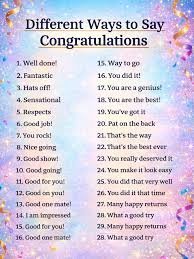
25+ Ways to Say Something Instead of Congrats
There are many alternatives to “congrats” that can work in different situations.
Some are short and casual. Others are warm and emotional. Some are appropriate for professional communication, while others are better for friends and family.
The following expressions give you a wider vocabulary for celebrating someone’s good news.
1. Well Done
“Well done” is one of the simplest alternatives. It recognizes that someone has achieved something through effort or ability.
It works well when you want to acknowledge success without making your message overly emotional.
The phrase is direct, positive, and easy to use in both personal and professional communication.
2. Great Job
“Great job” focuses on the quality of someone’s work or achievement.
It has a friendly and encouraging tone. It can work particularly well when someone has completed something difficult or reached an important goal.
The expression also feels natural in everyday conversations.
3. I’m So Happy for You
This phrase adds emotion to your message. Instead of simply recognizing the achievement, it communicates that you personally share in the person’s happiness.
It is especially suitable when you have a close relationship with the person.
The warmth of this phrase can make a short message feel more sincere.
4. You Deserve It
“You deserve it” recognizes the person’s effort and suggests that their success is well earned.
This can be a meaningful choice when someone has worked hard for a long time.
The phrase communicates support, respect, and appreciation for the person’s journey.
5. That’s Wonderful News
This is a warm and positive way to respond to someone’s good news.
It works well when the achievement or event is something genuinely exciting.
The expression does not sound too formal or too casual, making it flexible for many situations.
6. I’m Proud of You
“I’m proud of you” carries a stronger emotional feeling.
It can be especially meaningful when someone has overcome difficulties, reached a major goal, or accomplished something that required determination.
Because it is personal, this phrase is usually most appropriate when you have a close relationship with the person.
7. You Did It
“You did it” celebrates the completion of a goal.
The expression has an enthusiastic and supportive tone. It recognizes the journey while focusing on the successful outcome.
It can make your response feel energetic and encouraging.
8. That’s Amazing
“That’s amazing” communicates excitement and admiration.
It is a natural alternative when you want your response to sound enthusiastic without using traditional congratulatory language.
The phrase is short, simple, and suitable for casual conversations.
9. What an Achievement
This expression directly recognizes the importance of someone’s accomplishment.
It can sound more thoughtful than a basic congratulatory phrase because it emphasizes the achievement itself.
The wording can also work in situations where you want your response to sound slightly more polished.
10. You Should Be Proud
This phrase encourages the person to recognize their own achievement.
It is supportive because it shifts attention toward the effort and accomplishment of the individual.
The wording can feel particularly meaningful when the person has worked hard or overcome obstacles.
11. That’s Fantastic
“That’s fantastic” is an enthusiastic way to react to positive news.
It has a cheerful and friendly tone without sounding overly formal.
This makes it useful for everyday conversations and social communication.
12. I’m Delighted for You
This expression is warmer and slightly more formal than “I’m happy for you.”
It communicates genuine happiness about another person’s success or good news.
It can work well when you want your message to sound polished while still maintaining emotional warmth.
13. You Earned This
“You earned this” focuses on effort and achievement.
It recognizes that success often comes from persistence, dedication, and hard work.
This phrase can be particularly powerful when someone has spent significant time working toward a goal.
14. What a Wonderful Achievement
This phrase combines appreciation and celebration.
It gives the achievement more importance than a simple “congrats” while remaining easy to understand.
The wording can work in both personal and professional settings depending on the surrounding message.
15. I’m Excited for You
“I’m excited for you” communicates enthusiasm about another person’s success or future.
It is particularly useful when the achievement represents the beginning of a new stage in someone’s life.
The phrase feels friendly, positive, and supportive.
16. You’ve Come So Far
This expression focuses on progress rather than only the final result.
It can be meaningful when someone has spent a long time developing their skills, building a career, completing education, or working toward a personal goal.
It shows that you recognize their journey.
17. This Is Such Great News
This is a warm and conversational response to positive news.
It sounds natural because it expresses your immediate emotional reaction.
The phrase can be used when you want to celebrate someone’s happiness without relying on the word “congratulations.”
18. I’m Thrilled for You
“I’m thrilled for you” expresses strong excitement.
It can make a message sound more enthusiastic and emotionally engaging.
This wording is generally best when the news is genuinely important and exciting.
19. You Nailed It
“You nailed it” has a casual and energetic tone.
It suggests that someone performed extremely well or successfully achieved what they were trying to accomplish.
Because it is informal, it is usually more appropriate for friends, peers, and relaxed conversations.
20. That’s a Huge Accomplishment
This phrase emphasizes the importance of the achievement.
It can make your response sound more intentional because it directly recognizes the significance of what the person has accomplished.
The expression works well when the achievement required considerable effort.
21. I Knew You Could Do It
This phrase communicates confidence and personal support.
It suggests that you believed in the person before they achieved their goal.
That makes it especially meaningful in close relationships.
22. You’ve Earned Every Bit of This
This expression gives strong recognition to someone’s dedication.
It communicates that the person’s success is connected to their effort and persistence.
The phrase can make a message feel more personal and appreciative.
23. This Is a Big Moment
This wording recognizes the importance of a milestone.
Instead of directly congratulating someone, it acknowledges the significance of the moment.
It can work well when someone is entering an important new stage in life or career.
24. Wishing You Even More Success
This phrase combines recognition of current success with encouragement for the future.
It is particularly useful when you want your message to continue beyond the immediate achievement.
The tone is positive, supportive, and forward-looking.
25. So Well Deserved
“So well deserved” is a concise way to recognize someone’s achievement.
It communicates that you believe the person has earned the recognition or success they have received.
The phrase is short but can still feel thoughtful.
26. Here’s to Your Success
This expression has a celebratory feeling.
It focuses attention on the person’s achievement and creates a sense of positive recognition.
It can work well in social, professional, and celebratory communication depending on the context.
What to Say Instead of Congrats to a Friend
When deciding what to say instead of congrats to a friend, you usually have more freedom with your wording.
Friendships often allow for casual, emotional, humorous, and enthusiastic communication.
You do not necessarily need polished language. What matters is that your response sounds like something you would genuinely say to that person.
A close friend may appreciate a message that shows excitement and personal support.
You can also focus on the journey behind the achievement. Friends often know how much effort someone has invested, so recognizing that effort can make your message more meaningful.
The most important thing is authenticity. Avoid using complicated expressions simply because they sound impressive.
A natural message that reflects your relationship will usually feel better than a formal sentence that sounds copied or rehearsed.
What to Say Instead of Congrats Professionally
Professional situations require a little more consideration.
When responding to a coworker, manager, client, business partner, or professional contact, your language should remain respectful and appropriate.
You can still express enthusiasm, but the wording should generally be clear and polished.
Professional congratulations can focus on achievement, dedication, leadership, progress, and future success.
Phrases such as “well deserved,” “excellent achievement,” “wishing you continued success,” and “a remarkable accomplishment” can provide professional alternatives.
The goal is not to make your message unnecessarily formal. Instead, you want to maintain a professional tone while still showing genuine appreciation.
What to Say Instead of Congrats for a New Job
Starting a new job is an important career milestone.
When someone shares news about a new position, your response can recognize both their achievement and the opportunity ahead.
Instead of simply saying “congrats,” you can express excitement about their new chapter.
Career-related messages can also include positive wishes for growth, success, confidence, and fulfillment.
A thoughtful response can show that you recognize the importance of the opportunity rather than treating it as ordinary news.
When the person has worked hard to reach the position, acknowledging their dedication can make your message feel more personal.
What to Say Instead of Congrats for Graduation
Graduation represents more than completing an academic requirement.
It often reflects years of learning, effort, discipline, challenges, and personal growth.
For this reason, graduation messages can be more meaningful when they recognize the journey.
You can focus on pride, achievement, future opportunities, and the beginning of a new chapter.
A graduation message does not have to be lengthy. Even a short expression can feel powerful when it communicates genuine happiness and encouragement.
The most important part is recognizing that graduation is both an ending and a beginning.
What to Say Instead of Congrats for a Wedding
Wedding messages usually have a warm and celebratory tone.
Instead of relying only on “congrats,” you can focus on happiness, love, partnership, and the future.
Wedding wishes often feel more meaningful when they express positive feelings about the couple’s journey together.
The tone should also reflect your relationship with the couple.
A close friend may appreciate something warm and personal, while a professional acquaintance may need a more respectful and polished message.
The goal is to celebrate the relationship and wish the couple happiness in their future together.
What to Say Instead of Congrats for an Achievement
Not every achievement needs the same type of response.
A major professional award may call for more formal language. A personal goal may require something warmer and more emotional.
When recognizing an achievement, consider the effort behind it.
People often appreciate acknowledgment of their dedication more than generic praise.
You can recognize progress, persistence, talent, discipline, or determination.
This approach makes your response more personal because it shows that you understand the achievement rather than simply reacting to the result.
Formal Alternatives to “Congrats”
Formal communication benefits from language that is respectful and precise.
Some useful formal alternatives include expressions focused on achievement, success, recognition, and continued progress.
Formal wording is especially useful in business emails, professional announcements, workplace communication, academic settings, and public messages.
However, formal does not have to mean complicated.
Simple and clear language can often sound more professional than overly sophisticated wording.
When writing formally, avoid excessive emotional language unless the situation naturally calls for it.
Your goal should be to acknowledge the person’s success with respect and sincerity.
Casual Alternatives to “Congrats”
Casual communication allows you to be more relaxed.
You can use shorter phrases and more conversational language when talking with friends, classmates, family members, or close colleagues.
Casual wording often feels more natural because it reflects everyday speech.
The key is knowing your audience.
A phrase that feels friendly between close friends may not be suitable for a formal professional setting.
When you are unsure, choose simple language that is positive but not overly familiar.
Heartfelt Alternatives to “Congrats”
Sometimes a person’s achievement means more than a simple celebration.
It may represent years of effort, a difficult personal journey, or a major turning point.
In these situations, heartfelt language can make your message much more meaningful.
Instead of focusing only on the achievement, recognize the person’s emotions and effort.
Words that communicate pride, happiness, admiration, support, and encouragement can create a stronger emotional connection.
Heartfelt messages do not need to be long. Sincerity matters more than length.
A few carefully chosen words can communicate genuine care.
How to Choose the Right Alternative
Choosing what to say instead of congrats becomes easier when you consider a few important factors.
First, think about the occasion.
A promotion, graduation, wedding, award, new job, birthday milestone, or personal achievement may each require a different tone.
Second, consider your relationship with the person.
Your relationship affects how personal, casual, emotional, or formal your message should be.
Third, consider the person’s personality.
Some people enjoy enthusiastic reactions, while others prefer simple and sincere messages.
Fourth, think about the importance of the achievement.
A small accomplishment may only need a brief response, while a major life milestone may deserve more thoughtful wording.
Finally, make sure your language sounds natural.
Do not choose a phrase simply because it appears impressive. Choose words that you would actually feel comfortable saying.
How to Make Your Message More Meaningful
A meaningful congratulatory message usually has a personal quality.
Instead of sending the same response to everyone, think about what makes the person’s achievement important.
You can recognize their effort, dedication, patience, progress, or determination.
This makes the message feel more intentional.
Another way to make your message stronger is to connect the achievement with the person’s future.
Positive wishes for continued growth can make a short message feel more complete.
You should also avoid unnecessary repetition.
Using “congrats” several times in different messages can make your communication feel predictable. Having a wider vocabulary gives you more ways to express genuine feelings.
Why Short Messages Can Still Be Powerful
A common mistake is assuming that a meaningful message must be long.
That is not necessarily true.
A short message can be powerful when the words are sincere and appropriate.
People usually remember the feeling behind a message more than its exact length.
A concise response can communicate excitement, pride, support, or admiration without becoming overwhelming.
This is especially important for social media comments and quick messages.
The goal is not to write as many words as possible. The goal is to choose the right words.
Avoiding Generic Responses
Generic responses are not always bad, but they can sometimes feel automatic.
When someone shares important news, they may appreciate a response that shows you actually noticed the significance of the moment.
Instead of immediately sending the same phrase you use every time, pause and consider what the person has achieved.
A small amount of personalization can make a major difference.
You do not need to create an elaborate message. Simply choosing language that fits the situation can make your response feel more genuine.
The Difference Between “Congrats” and “Congratulations”
“Congrats” is an informal shortened form of “congratulations.”
Both communicate positive recognition, but they can create slightly different impressions.
“Congrats” is usually casual and conversational.
“Congratulations” can sound more complete and polished.
Neither is automatically better.
The choice depends on your relationship with the person and the context of the communication.
If you are writing professionally, the full form may sometimes feel more appropriate.
If you are communicating casually, “congrats” may be perfectly natural.
However, having alternatives gives you more flexibility.
What Makes a Good Congratulatory Message?
A good congratulatory message should feel sincere.
It should recognize the person’s achievement and communicate a positive feeling.
The wording should also match the occasion.
A good message does not need complicated vocabulary.
Clear, natural, and emotionally appropriate language is usually more effective.
It is also helpful to avoid making the message entirely about yourself.
The focus should remain on the person who achieved something important.
When your words communicate genuine happiness for them, the message becomes much more meaningful.
Common Mistakes When Choosing What to Say
One common mistake is choosing language that is too formal for the relationship.
Another is using overly casual language in a professional situation.
Some people also make the mistake of exaggerating their response.
If the wording does not match your genuine feelings, it may sound unnatural.
Another issue is making the message too long.
Long messages are not always more meaningful. Sometimes they can distract from the main point.
It is also important not to compare the person’s achievement with someone else’s.
A congratulatory message should celebrate the individual rather than turn the moment into a comparison.
What to Say Instead of Congrats on Social Media
Social media communication is usually more casual.
Short comments are common, but you can still make them feel thoughtful.
Instead of using the same standard phrase every time, you can choose language that reflects excitement, admiration, or support.
The best social media responses are usually short enough to read quickly while still showing genuine enthusiasm.
Avoid making the message overly formal unless the context requires it.
Social platforms are generally conversational, so natural wording works best.
What to Say Instead of Congrats in a Text Message
Text messages allow you to communicate quickly.
Because texting is usually informal, short and natural expressions work well.
You can choose wording based on your relationship with the person.
A close friend may appreciate enthusiastic language, while a colleague may prefer something simple and professional.
The important thing is that the response feels like a real conversation.
Avoid making a casual text sound like a formal announcement unless there is a specific reason to do so.
What to Say Instead of Congrats in an Email
Email communication requires more attention to tone.
If the email is professional, your wording should remain polished and respectful.
You can recognize the person’s achievement while also expressing positive wishes for their future.
A professional email does not need to be excessively long.
A clear opening, sincere recognition, and positive closing can be enough.
When responding to a major professional achievement, slightly more formal wording may be appropriate.
How Tone Changes the Meaning
The same basic message can feel different depending on the words you choose.
A casual phrase can communicate friendship and excitement.
A formal phrase can communicate respect.
A heartfelt phrase can communicate emotional connection.
An encouraging phrase can communicate support for the future.
This is why knowing what to say instead of congrats is useful.
You are not simply replacing one word. You are choosing a tone that fits the moment.
Understanding tone can help you communicate more effectively in personal and professional situations.
Why Personalization Matters
Personalization is one of the easiest ways to improve a congratulatory message.
A personalized message does not necessarily need to mention many details.
Even a small acknowledgment of the person’s effort or progress can make the message feel more genuine.
People often respond positively when they feel that someone truly noticed their achievement.
This is especially important for major milestones.
When you personalize your language, you show that the person is more important than the achievement itself.
Choosing Words That Sound Natural
Natural language is usually better than complicated vocabulary.
When people search for alternatives to “congrats,” they sometimes look for expressions that sound impressive.
However, the most effective wording is often simple.
A phrase should feel like something a real person would naturally say.
Avoid unnecessary exaggeration.
Avoid expressions that are too formal for everyday communication.
Most importantly, choose language that reflects your actual relationship with the person.
Authenticity makes a message stronger.
When “Congrats” Is Still the Best Choice
Even though there are many alternatives, “congrats” remains useful.
It is short.
It is friendly.
It is widely understood.
It works well in many casual situations.
You do not need to avoid the word completely.
The purpose of learning alternatives is simply to give yourself more choices.
Sometimes “congrats” will be exactly right.
Other times, a more personal phrase may communicate your feelings better.
Having different options allows you to choose rather than repeat the same expression automatically.
FAQ
What can I say instead of congrats?
You can use phrases that express happiness, appreciation, pride, support, or admiration. The best alternative depends on the occasion and your relationship with the person.
What is a better word for congrats?
“Congratulations” is the full form of “congrats,” but there are many other alternatives. Words and phrases such as “well done,” “great job,” “so well deserved,” and “I’m happy for you” can provide different tones.
How do you congratulate someone without saying congratulations?
You can recognize their achievement without using the word “congratulations.” Focus on their success, effort, progress, happiness, or future.
What can I say instead of congrats professionally?
Professional alternatives can focus on achievement and continued success. Polished expressions are generally better suited to workplace emails, business communication, and professional announcements.
What is a heartfelt way to say congratulations?
Heartfelt wording usually focuses on genuine happiness, pride, appreciation, and support. The message should feel personal rather than automatic.
Is “well done” better than “congrats”?
Neither phrase is always better. “Well done” focuses more on the person’s performance or effort, while “congrats” directly recognizes the achievement.
Can I use casual alternatives in professional communication?
Some casual expressions may work with close colleagues, but professional situations generally require more polished language. Consider the workplace culture and your relationship with the recipient.
Should a congratulatory message be long?
No. A short message can be meaningful when it is sincere and appropriate. Length is less important than the feeling and intention behind the words.
How can I make a congratulations message more personal?
Focus on the person’s achievement, effort, progress, or future. Choosing words that fit the specific situation can make the message feel more genuine.
What should I avoid when congratulating someone?
Avoid language that sounds insincere, overly exaggerated, inappropriate for the relationship, or unrelated to the person’s achievement. Keep the focus on celebrating their success.
For questions about English grammar, word choice, and writing style, the British Council LearnEnglish website provides useful learning resources. Exploring these resources can help you develop clearer and more natural English communication for personal, academic, and professional situations.
Final Thoughts
Knowing what to say instead of congrats gives you more freedom to communicate naturally.
“Congrats” is useful, but it is only one of many ways to celebrate another person’s success.
You can choose words that express happiness, pride, admiration, encouragement, or respect.
The best phrase depends on the occasion and the relationship.
A professional achievement may call for polished language. A friend’s success may deserve something casual and enthusiastic. A major personal milestone may benefit from a heartfelt response.
You do not need to use complicated words to make your message meaningful.
Simple language can be incredibly powerful when it is sincere.
Think about what the person has achieved and why it matters. Then choose words that reflect your genuine feelings.
Sometimes the best response is short. Sometimes the occasion deserves something more thoughtful.
What matters most is making the person feel recognized and supported.
By learning different alternatives, you can avoid repetitive messages and communicate with greater confidence.
The next time you wonder what to say instead of congrats, consider the tone, occasion, relationship, and emotion behind the moment.
Choose words that feel natural.
Choose words that feel sincere.
Most importantly, choose words that make the other person feel that their achievement truly matters.