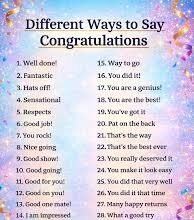


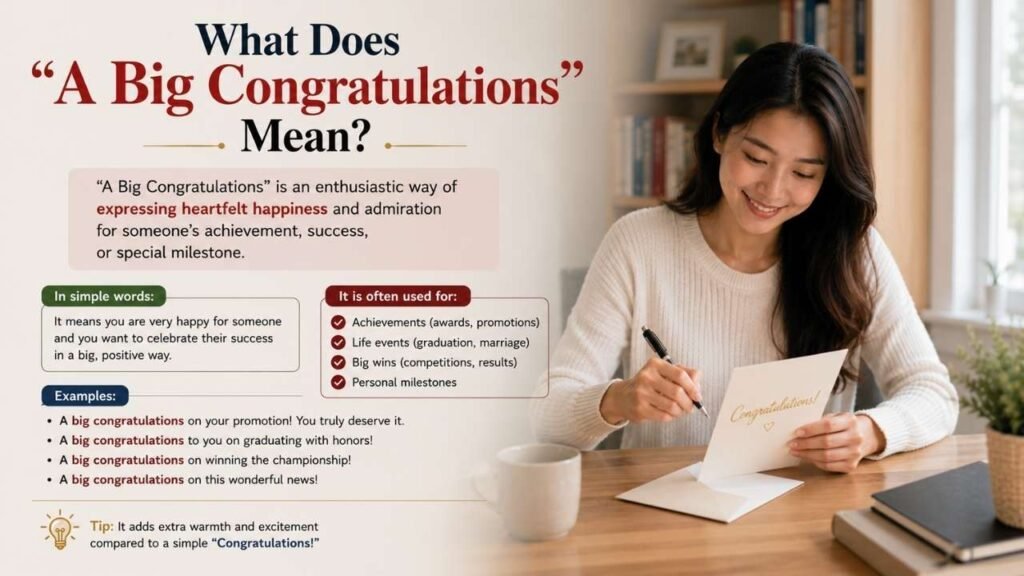
Finding the right words to celebrate someone’s success is not always easy. The word “congratulations” is common, polite, and appropriate for many situations. However, sometimes you may want to say something more personal, warm, meaningful, or natural.
Knowing what to say instead of congratulations can help you create a message that feels more genuine. Different situations often need different kinds of words. A professional achievement may require a respectful message, while a close friend’s success may call for something more personal and relaxed.
The good news is that there are many ways to express happiness for someone without using the traditional word “congratulations.” You can recognize their achievement, celebrate their progress, express your pride, or simply let them know that you are happy for them.
The best message does not always need complicated words. A short and sincere sentence can sometimes have a stronger emotional impact than a long message.
This guide explains what to say instead of congratulations and how to choose the right words for different situations.
What to Say Instead of Congratulations
There are many alternatives to the word “congratulations.” The right choice depends on the situation, your relationship with the person, and the emotion you want to communicate.
You can use words that express happiness, admiration, pride, encouragement, appreciation, or excitement. These approaches allow your message to sound more natural and personal.
Some alternatives focus on the achievement itself. Others focus on the person’s effort, dedication, or future. Choosing the right approach can make your message feel less formal and more meaningful.
You may also want to avoid repeating the same phrase when you are writing several messages. Using different expressions can make your communication feel more thoughtful.
The important thing is to make sure your words match the occasion. A professional achievement should usually receive a different tone from a personal milestone.
Why Look for Alternatives to Congratulations?
“Congratulations” is a useful word, but it can sometimes feel predictable. When people hear the same expression repeatedly, it may lose some of its emotional impact.
Finding alternatives allows you to communicate your feelings in a more specific way. Instead of simply acknowledging someone’s success, you can show that you understand why the achievement matters.
Personal language can also make a message feel warmer. It can show that you are not simply sending a standard response.
Another reason to use alternatives is that not every positive occasion feels like a traditional achievement. Some moments are about new beginnings, personal growth, recovery, relationships, or important life changes.
In these situations, a supportive or encouraging message may be more suitable than direct congratulations.
Knowing what to say instead of congratulations gives you more flexibility when communicating with friends, family members, coworkers, classmates, clients, and other people in your life.
The Importance of Choosing the Right Words
Words have emotional meaning. Even when two phrases communicate a similar idea, they may create different feelings.
A formal phrase can sound respectful but distant. A casual phrase can feel friendly but may not be suitable for a professional situation.
The best message considers both the occasion and the relationship.
When speaking to a close friend, you may want to express excitement and happiness. When speaking to a colleague, you may want to recognize their professional achievement.
When addressing someone who has worked hard for a long time, recognizing their dedication can make your message more meaningful.
The goal is not simply to replace one word with another. The goal is to communicate genuine positive feelings in a way that feels natural.
Thoughtful Ways to Celebrate Someone’s Success
A person’s success often represents effort, patience, discipline, and determination. A meaningful message can recognize more than the final result.
Instead of focusing only on the achievement, you can acknowledge the journey behind it.
This approach makes your words feel more personal. It shows that you appreciate the work that went into reaching the goal.
Expressions of admiration can also be powerful. They communicate respect for the person’s ability and dedication.
Words of encouragement can be equally valuable. They can help someone feel motivated as they move toward their next goal.
Sometimes the most meaningful response is simply an expression of happiness. Letting someone know that their success makes you happy can create a strong emotional connection.
What to Say Instead of Congratulations to a Friend
Friends often appreciate messages that sound natural and sincere. You do not always need formal language when celebrating a friend’s achievement.
A friendly message can focus on happiness, excitement, pride, or admiration.
The tone should reflect the relationship you share. Close friendships often allow for more emotional and relaxed language.
You can also acknowledge how much the achievement means to the person. This makes the message feel more personal than a standard congratulatory phrase.
A good message can celebrate the person’s success while also showing that you are genuinely happy to see them doing well.
Friendship is often about sharing both difficult and successful moments. A thoughtful message can strengthen that connection.
What to Say Instead of Congratulations Professionally
Professional situations require a different approach. When communicating with a coworker, manager, client, business partner, or professional contact, your language should usually remain respectful.
You can recognize someone’s achievement without sounding overly casual.
Professional messages often work best when they focus on accomplishment, dedication, progress, or future success.
A respectful message can also acknowledge the importance of the achievement within the person’s career.
The tone should remain positive while avoiding unnecessary personal language.
When writing professional communication, clarity is important. Short and polished messages are often more effective than long emotional paragraphs.
A professional alternative to congratulations should communicate recognition without sounding exaggerated.
What to Say Instead of Congratulations for a New Job
Starting a new job is an important transition. It represents a new opportunity, a new environment, and often a new stage of professional development.
Instead of simply saying congratulations, you can focus on the opportunity ahead.
Positive wishes for the person’s future can make the message more encouraging.
You can also recognize the effort that helped them reach the new position.
A new job may involve excitement as well as uncertainty. Supportive language can make the person feel confident about the change.
The best message should communicate happiness for their opportunity while showing genuine encouragement for the future.
What to Say Instead of Congratulations for a Promotion
A promotion often reflects hard work, reliability, skill, and professional growth.
A thoughtful response can recognize these qualities rather than focusing only on the promotion itself.
You can express admiration for the person’s progress and acknowledge their dedication.
A promotion also represents increased responsibility. Supportive language can recognize the person’s ability to take on new challenges.
The message can remain professional while still sounding warm and genuine.
Recognizing someone’s career development is a meaningful way to show respect for their work.
What to Say Instead of Congratulations on an Achievement
Achievements can take many forms. Someone may reach an academic goal, complete a difficult project, develop a new skill, or accomplish something personally important.
Because achievements are different, the message should reflect the significance of the accomplishment.
Words that recognize effort can be especially meaningful.
Many achievements require patience and persistence. Recognizing those qualities can make your response more thoughtful.
You can also focus on the person’s growth. Success is often not only about reaching a goal but also about becoming more capable throughout the process.
A meaningful message can celebrate both the result and the journey.
What to Say Instead of Congratulations at a Wedding
Weddings are emotional and meaningful occasions. Traditional congratulations are common, but many people prefer warmer expressions.
Wedding messages can focus on love, happiness, togetherness, and the future.
A thoughtful wedding message should respect the importance of the relationship and the beginning of a new chapter.
Warm wishes can make the message feel more personal.
You can also focus on the couple’s future happiness and shared journey.
Wedding communication often benefits from positive and heartfelt language. The goal is to express genuine happiness for the couple.
What to Say Instead of Congratulations for Graduation
Graduation marks the completion of an important stage of education.
It often represents years of studying, effort, discipline, and persistence.
Instead of using only a traditional congratulatory phrase, you can recognize the journey that led to graduation.
Graduation also represents a new beginning. Positive words about the future can make the message more meaningful.
Encouragement is especially appropriate because graduates often face important decisions about education, career, and personal goals.
A thoughtful message can celebrate the achievement while expressing confidence in what comes next.
What to Say Instead of Congratulations for a Personal Milestone
Not every important milestone is connected to work or education.
People experience many personal milestones throughout life. These moments may involve relationships, personal growth, major decisions, new responsibilities, or significant changes.
Personal milestones often require a more emotional approach.
A supportive message can acknowledge the importance of the moment without making it sound overly formal.
The best words should feel sincere and respectful.
Personal milestones are often meaningful because of the emotional journey behind them. Recognizing that journey can make your message more powerful.
What to Say Instead of Congratulations When Someone Is Starting Something New
New beginnings can be exciting and uncertain at the same time.
Someone may be starting a new career, moving to a new place, beginning a new project, or entering a new stage of life.
In these situations, words of encouragement can sometimes be better than traditional congratulations.
A supportive message can focus on confidence, hope, excitement, and future possibilities.
New beginnings often involve challenges. Encouraging words can help the person feel supported as they move forward.
A message that recognizes the courage involved in starting something new can be especially meaningful.
Warm Alternatives to Congratulations
Warm alternatives are useful when you want your message to feel friendly and sincere.
These expressions usually focus on happiness, pride, admiration, and positive feelings.
Warm language works well for friends, family members, and people with whom you have a close relationship.
The tone should feel natural rather than overly formal.
You can also combine positive feelings with recognition of the person’s achievement.
Warm communication is often more memorable because it communicates emotion rather than simply acknowledging an event.
Heartfelt Alternatives to Congratulations
Heartfelt messages are useful when the occasion has strong emotional importance.
A heartfelt response can recognize the person’s feelings, effort, and personal journey.
It does not need to be long. Sincerity is more important than length.
Words that express genuine pride can be powerful.
Expressions of happiness can also help the recipient feel that their success matters to others.
When writing a heartfelt message, avoid language that sounds artificial or overly dramatic.
Natural words often create the strongest emotional connection.
Casual Alternatives to Congratulations
Casual messages work well for everyday communication.
They are especially useful when speaking with friends, classmates, siblings, or people you know well.
A casual message should sound like normal conversation.
There is no need to use complicated vocabulary.
Simple language can communicate excitement and support effectively.
The key is to make the message sound like something you would naturally say.
Casual alternatives are also useful for social media comments and short messages.
Formal Alternatives to Congratulations
Formal situations require greater attention to tone.
Formal alternatives can be useful for professional announcements, business communication, academic achievements, and official messages.
The language should remain respectful and polished.
Avoid overly emotional wording when the relationship is professional.
At the same time, the message should not sound cold or mechanical.
A balanced formal message can recognize the achievement while maintaining professional distance.
This is especially important when communicating with senior colleagues, clients, organizations, or professional contacts.
How to Make Your Message More Personal
Personalization is one of the easiest ways to improve a congratulatory message.
Instead of relying on a standard phrase, think about what makes the occasion important.
Consider the person’s effort, emotions, goals, or plans.
You can recognize the qualities that contributed to the achievement.
Personal messages often feel more sincere because they show that you are paying attention.
Even a short message can feel personal when it reflects the person’s situation.
Avoid adding unnecessary information simply to make the message longer. A focused message is often more effective.
How to Choose the Right Alternative
Choosing the right phrase depends on several factors.
First, consider the occasion.
A wedding, graduation, promotion, new job, personal milestone, and professional achievement may all require different wording.
Second, consider your relationship with the person.
A close friend may appreciate casual and emotional language. A professional contact may prefer a respectful and polished response.
Third, consider the person’s personality.
Some people prefer simple messages. Others appreciate emotional and expressive communication.
Finally, consider the communication platform.
A short social media comment may need only a few words. A personal card or private message may allow more room for emotion.
Understanding these factors makes it easier to decide what to say instead of congratulations.
What Makes an Alternative Better Than Congratulations?
An alternative is not automatically better simply because it is different.
The value comes from how well the words fit the situation.
A simple congratulations can still be completely appropriate.
However, an alternative may be more effective when you want to communicate a specific feeling.
You may want to express pride rather than simple recognition.
You may want to express excitement about someone’s future.
You may want to recognize the effort behind an achievement.
You may want to offer encouragement during a new stage of life.
In each case, a more specific message can communicate more meaning than a general phrase.
Avoiding Overused Language
Overused language can sometimes make a message feel automatic.
This does not mean common phrases are bad. Familiar expressions are popular because they are clear and appropriate.
However, repeating the same phrase in every situation can make communication feel less personal.
Using different expressions gives you more opportunities to communicate genuine emotion.
You can also vary the structure of your message.
Sometimes recognition is enough. Sometimes encouragement is better. Sometimes expressing happiness is the most natural approach.
The goal is to communicate sincerely rather than simply avoid a particular word.
The Role of Emotion in a Good Message
Emotion makes communication more meaningful.
When someone reaches an important goal, they often want to know that others recognize the significance of the moment.
A thoughtful response can provide emotional support.
Pride, happiness, admiration, excitement, encouragement, and appreciation are all useful emotions in positive messages.
The emotion you choose should match the occasion.
A professional promotion may call for admiration and respect.
A personal milestone may call for warmth and happiness.
A new beginning may call for encouragement and optimism.
Matching emotion with context helps your message feel natural.
How to Keep Your Message Natural
Natural writing does not require complicated vocabulary.
In fact, simple language is often more effective.
Write the way you would normally speak while still considering the situation.
Avoid unnecessary formal expressions when communicating with someone close to you.
Likewise, avoid overly casual language in professional communication.
A natural message should feel comfortable and sincere.
Short sentences can also make your message easier to understand.
You do not need to fill every message with emotional words. One genuine thought can be enough.
What to Say Instead of Congratulations Without Sounding Awkward
Sometimes people search for alternatives because they are worried that their message will sound strange.
The easiest way to avoid awkwardness is to keep the language simple.
Do not force an unusual synonym just because it is different.
Choose words that naturally express your feelings.
If the phrase sounds unnatural when you say it aloud, it may not be the right choice.
Good communication should feel comfortable.
You can also focus on the person’s achievement rather than searching for a direct replacement for the word “congratulations.”
This gives you much more freedom.
Using Encouragement Instead of Congratulations
Encouragement can be a strong alternative when someone is beginning a new journey.
Instead of focusing only on what they have achieved, you can express confidence in what they will accomplish next.
This approach works particularly well for career changes, education, personal goals, and new projects.
Encouragement shows that you believe in the person’s ability.
It also shifts the focus from the past achievement to the future.
This can make your message feel optimistic and supportive.
Using Appreciation Instead of Congratulations
Appreciation is another useful approach.
You can recognize the effort, dedication, or qualities that contributed to the person’s success.
This can make the message more meaningful because it acknowledges the work behind the result.
People often appreciate being recognized for their effort rather than only for the final outcome.
Appreciation can also strengthen professional relationships.
It shows respect and recognition without requiring overly emotional language.
Using Pride Instead of Congratulations
Expressions of pride can communicate strong emotional support.
This is especially appropriate for family members, close friends, mentors, and people with whom you share a meaningful relationship.
Pride communicates that the person’s achievement matters to you.
It can also recognize the journey they have taken.
When used sincerely, expressions of pride can make a short message feel deeply personal.
The important thing is to make sure the level of emotion fits the relationship.
Using Happiness Instead of Congratulations
Sometimes the simplest response is to express happiness.
Letting someone know that you are happy for them can communicate genuine emotional support.
This approach works across many situations.
It can be personal, friendly, professional, or casual depending on the wording.
Happiness is also easy to communicate naturally.
There is no need to use complicated expressions when a sincere statement of positive emotion can communicate the message clearly.
Using Admiration Instead of Congratulations
Admiration focuses on respect for what someone has accomplished.
This is particularly useful when an achievement required significant effort, patience, skill, or determination.
Admiration can make the message feel more thoughtful because it recognizes the qualities behind the achievement.
It can also work well in professional settings.
Showing respect for someone’s work can strengthen professional relationships and demonstrate genuine appreciation.
What to Say Instead of Congratulations on Social Media
Social media messages are usually shorter than personal messages.
People often want to express support quickly while keeping the wording natural.
Short alternatives can work well in comments, posts, and direct messages.
The tone can be friendly and positive.
Avoid making the message unnecessarily long unless the occasion deserves a more detailed response.
Social media communication also benefits from natural language.
A simple, sincere statement can be more effective than a complicated phrase.
What to Say Instead of Congratulations in a Card
Cards provide more space for emotional communication.
You can write a message that recognizes the occasion while also expressing personal feelings.
The tone depends on the relationship and the type of card.
A personal card can be warmer and more emotional.
A professional card should remain respectful.
Because cards are often kept as memories, thoughtful wording can make a lasting impression.
The message should feel sincere rather than generic.
What to Say Instead of Congratulations in a Text Message
Text messages usually favor short and direct communication.
You can express happiness, excitement, pride, or support without writing a long paragraph.
The most important thing is to respond naturally.
If the person has shared an important achievement with you, a quick but genuine response can still be meaningful.
Avoid making the message sound like a formal announcement when a casual tone is more appropriate.
Text communication works best when it reflects your normal way of speaking.
Common Mistakes When Choosing Alternatives
One common mistake is choosing words that are too complicated.
A rare synonym may technically replace congratulations, but it may not sound natural.
Another mistake is using a tone that does not match the occasion.
Overly casual language can feel inappropriate in professional situations.
Overly formal language can feel distant when speaking to a close friend.
Another problem is focusing too much on the wording and not enough on the emotion.
The purpose of the message is to make the other person feel recognized and supported.
Finally, avoid making every message extremely long.
Meaningful communication does not depend on word count.
If you want to understand the verb behind the phrase, the Cambridge Dictionary’s definition of “congratulate” explains how the word is used to praise someone and express pleasure about a special achievement. This can help you understand when a direct congratulations message is appropriate and when another expression may communicate your feelings better.
FAQ
What can I say instead of congratulations?
You can express happiness, pride, admiration, appreciation, encouragement, or excitement. The best alternative depends on the occasion and your relationship with the person.
What is a better word for congratulations?
There is no single word that is always better. Expressions related to happiness, achievement, pride, admiration, and encouragement can work depending on the context.
How do you congratulate someone without saying congratulations?
You can focus on their achievement, recognize their hard work, express happiness for them, or offer positive wishes for their future.
What can I say instead of congratulations professionally?
Professional communication can focus on recognizing someone’s achievement, dedication, progress, or success. The language should remain respectful and polished.
What is a casual way to say congratulations?
A casual message can focus on excitement, happiness, pride, or support. The wording should sound natural and match your relationship with the person.
How do you congratulate someone in a heartfelt way?
A heartfelt message should focus on genuine emotion. You can express pride, happiness, admiration, or appreciation while recognizing why the achievement is important.
Can I use alternatives to congratulations in professional messages?
Yes. Alternatives can make professional messages feel more personalized while remaining respectful. Recognition, appreciation, and positive wishes are useful approaches.
Is it okay to simply say congratulations?
Yes. “Congratulations” remains a completely appropriate and widely accepted expression. You do not need to avoid it unless you have a specific reason to use different wording.
Why should I use alternatives to congratulations?
Alternatives can help you communicate more specifically. They allow you to express emotions such as pride, happiness, admiration, appreciation, and encouragement.
Should alternatives to congratulations be longer?
Not necessarily. A short and sincere message can be more effective than a long message that feels forced.
Final Thoughts
Knowing what to say instead of congratulations gives you more ways to communicate positive feelings.
The traditional word “congratulations” is still useful and appropriate in many situations. However, there are times when a more personal expression can make your message feel special.
You can focus on happiness, pride, admiration, appreciation, encouragement, or excitement.
The best choice depends on the occasion, relationship, personality, and tone of communication.
A professional achievement may need respectful recognition. A personal milestone may benefit from warmth and emotion. A new beginning may call for encouragement and positive wishes.
There is no single perfect phrase for every situation.
What matters most is sincerity.
When your words genuinely recognize another person’s achievement or important moment, even a simple message can have a meaningful impact.
So, when you are wondering what to say instead of congratulations, think beyond the word itself.
Consider what you truly want the person to feel.
Then choose words that communicate that feeling naturally, clearly, and sincerely.