

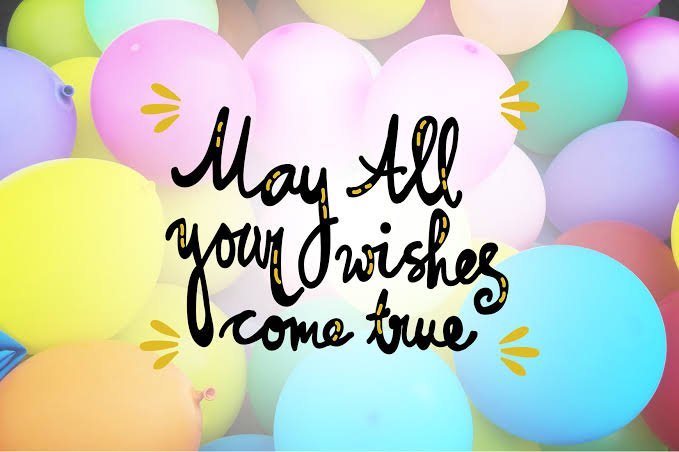
The phrase “may all your wishes come true” is a warm and heartfelt expression used to wish someone happiness, success, fulfillment, and positive experiences in the future. It is commonly used when someone is celebrating an important occasion, beginning a new chapter, reaching a major milestone, or simply hoping for a better future.
When you say “may all your wishes come true,” you are expressing the hope that the things another person genuinely wants in life will eventually become reality. Those wishes may involve happiness, love, career success, personal goals, family, relationships, education, health, travel, or other meaningful aspirations.
The phrase has a positive and thoughtful tone. It can sound emotional without being overly dramatic, which is one reason it works for many different occasions. It can be used in birthday messages, wedding wishes, New Year greetings, graduation messages, congratulations, new-job messages, and messages for someone beginning a new journey.
The word “may” is especially important because it turns the statement into a wish or blessing rather than a prediction. The speaker is not claiming that every wish will definitely happen. Instead, they are expressing sincere hope that the person will experience the future they desire.
Understanding the meaning of this phrase can help you use it naturally and appropriately. Although the sentence is simple, its emotional meaning can change slightly depending on the occasion and the relationship between the people involved.
What Does “May All Your Wishes Come True” Mean?
The basic meaning of “may all your wishes come true” is a sincere hope that everything a person wishes for will become reality. It communicates positive feelings toward someone’s future and expresses a desire for that person to experience happiness and fulfillment.
The phrase contains three important ideas: “may,” “all your wishes,” and “come true.” Together, they create a complete expression of goodwill.
“May” is used to express a wish, hope, blessing, or possibility. In this phrase, it does not mean that something is guaranteed. Instead, it introduces a positive hope for another person’s future.
“All your wishes” refers to the things the person hopes for or wants to achieve. These wishes can be small personal desires or major life goals. The expression is intentionally broad, allowing it to work across many situations.
“Come true” means that something hoped for or desired actually happens. Therefore, when these words are combined, the phrase essentially means that the speaker hopes the recipient’s important wishes and aspirations become reality.
The expression is usually positive, supportive, and affectionate. Depending on the situation, it can be friendly, emotional, respectful, or celebratory.
Is “May All Your Wishes Come True” Correct?
Yes, “may all your wishes come true” is grammatically correct and natural English. It is a well-established expression used to communicate good wishes.
The sentence follows a traditional grammatical structure used for wishes and blessings. After “may,” the verb remains in its base form, which is why “come” is correct rather than “comes.” The phrase is therefore grammatically structured as a wish rather than an ordinary statement.
It is also natural because the expression clearly communicates the speaker’s intention. The person using it is not making a factual claim about the future. They are expressing hope and goodwill.
The phrase can stand alone as a complete message, or it can be incorporated into a longer greeting. Its simplicity makes it particularly useful when the writer wants to express genuine feelings without using complicated language.
Because it is grammatically correct and widely understood, it can be used by both native and non-native English speakers. It is especially common in greeting cards, social media posts, personal messages, celebration messages, and other forms of written communication.
Why Does “May” Matter in This Phrase?
The word “may” gives the phrase its characteristic tone. Without it, the sentence would not have the same grammatical structure or emotional meaning.
“May” is often used when expressing hopes, blessings, and wishes. In “may all your wishes come true,” it signals that the speaker is hoping for a positive outcome.
This is different from saying that someone’s wishes will definitely come true. The expression does not promise anything about the future. Instead, it communicates a sincere desire that good things happen.
This makes the phrase suitable for many occasions because it remains respectful and emotionally appropriate. It allows the speaker to express optimism without pretending to know what will happen.
The use of “may” also gives the sentence a slightly traditional and heartfelt quality. This is one reason the phrase works especially well in celebrations and meaningful messages.
When Should You Say “May All Your Wishes Come True”?
There are many occasions when “may all your wishes come true” can be appropriate. The common theme is that the recipient is experiencing an important moment, celebrating something meaningful, or looking toward the future.
Birthdays are one of the most common occasions for this phrase because birthdays naturally encourage people to think about happiness, goals, and the year ahead.
Weddings are another appropriate occasion. A wedding marks the beginning of a new stage of life, making a heartfelt wish for happiness and fulfillment particularly suitable.
New Year celebrations also provide a natural context because people often think about future goals, hopes, plans, and opportunities at the beginning of a new year.
Graduation is another occasion where the phrase works well. Graduation represents the completion of one chapter and the beginning of another, so wishing someone that their hopes come true fits the emotional meaning of the event.
A new job can also provide an opportunity to use the phrase. Starting a new position often represents professional growth, ambition, and change.
The expression can also be used when someone begins a new journey in life. This could involve moving to a new place, starting a new career, pursuing a personal goal, or entering a different stage of life.
The key is that the message should feel sincere and connected to the occasion.
May All Your Wishes Come True for a Birthday
Birthdays are one of the most natural occasions for saying “may all your wishes come true.” A birthday is not only a celebration of someone’s life but also an opportunity to look forward to another year.
The phrase works particularly well because birthdays often involve personal hopes and future goals. People may be thinking about what they want to accomplish, where they want to go, and what they hope the coming year will bring.
Using this expression in a birthday message creates a warm and optimistic tone. It communicates more than a simple birthday greeting because it focuses on the person’s future happiness.
The phrase can work for friends, family members, colleagues, classmates, and other people in your life. The surrounding language can determine whether the overall message feels casual, emotional, professional, or deeply personal.
For close relationships, the phrase can be part of a more heartfelt birthday message. For professional relationships, it can be used in a simpler and more restrained way.
Its flexibility makes it one of the most useful phrases for birthday wishes. It does not depend on age, gender, or specific personal circumstances, which means it can be adapted to many different birthday situations.
May All Your Wishes Come True for a Wedding
A wedding marks an important transition in a person’s life, so “may all your wishes come true” can be a meaningful part of a wedding message.
Wedding wishes often focus on love, happiness, companionship, peace, and a successful future together. The phrase naturally fits this theme because it expresses hope for a positive future.
When directed toward newlyweds, the phrase can communicate good wishes for both their individual aspirations and their life together. It can be combined with ideas about happiness, love, and shared memories without becoming overly complicated.
The tone can also be adjusted according to the relationship. A close friend or family member may use more emotional language, while a colleague or professional acquaintance may prefer a simple and respectful message.
The expression is particularly effective in wedding cards and congratulatory messages because it looks toward the future rather than focusing only on the wedding day.
May All Your Wishes Come True for New Year
The New Year is naturally associated with hopes, plans, goals, and fresh beginnings. For that reason, “may all your wishes come true” fits perfectly into many New Year greetings.
People often use the beginning of a new year to reflect on the past and think about what they want from the future. Some may have personal goals, professional ambitions, family hopes, or plans for personal development.
A New Year message containing this phrase communicates optimism without making unrealistic promises. It expresses the hope that the recipient experiences positive changes and meaningful achievements throughout the year.
The phrase can work in personal messages, social media greetings, greeting cards, and professional communication. Its neutral positivity allows it to fit different audiences.
For professional contacts, the expression can be paired with wishes for success and growth. For friends and family, it can carry a warmer and more emotional tone.
Because the New Year represents a fresh beginning, the phrase can also suggest hope for new opportunities and memorable experiences.
May All Your Wishes Come True for Graduation
Graduation is a significant milestone that often marks the end of one period and the beginning of another. Students may be preparing for employment, higher education, entrepreneurship, travel, or other major life changes.
In this context, “may all your wishes come true” communicates encouragement for the future. It recognizes that graduation is not simply an ending but also the beginning of new possibilities.
The phrase can be particularly meaningful when the graduate has worked toward a long-term goal. It acknowledges their achievement while expressing hope for continued success.
Graduation messages often combine congratulations with encouragement. “May all your wishes come true” can serve as the future-focused part of such a message.
The expression also avoids limiting the graduate to one particular definition of success. Instead of assuming what the person wants next, it leaves room for their own goals and ambitions.
That flexibility makes it suitable for graduates entering very different paths.
May All Your Wishes Come True for a New Job
Starting a new job can be an exciting and important moment. It may represent career growth, a new challenge, financial progress, professional development, or a completely new direction.
Using “may all your wishes come true” in a new-job message expresses positive hopes for the person’s professional future.
The phrase can communicate encouragement without becoming too specific. Instead of assuming exactly what the person wants from their new position, it leaves space for their individual goals.
For a colleague, friend, family member, or professional contact, the expression can be combined with wishes for success, confidence, growth, and satisfaction.
A new job also represents a new beginning, which connects naturally with the phrase’s future-oriented meaning. The speaker is essentially wishing that the person’s hopes for this new chapter become reality.
The wording can be adapted to suit the relationship. A professional message may use a simple and polished tone, while a personal message may express more enthusiasm and emotional support.
May All Your Wishes Come True for Someone Starting a New Journey
Life is full of transitions, and many of them can be described as new journeys. Someone may be moving to another city, beginning a new career, starting a new educational path, pursuing a personal ambition, or entering a new stage of life.
In these situations, “may all your wishes come true” can communicate encouragement and optimism.
The phrase is particularly useful because it does not require you to know exactly what the person’s future will look like. It simply expresses the hope that their aspirations are fulfilled.
Starting a new journey can bring excitement as well as uncertainty. A thoughtful message can provide encouragement without making unrealistic promises about the future.
The phrase can therefore work as a supportive closing or central idea in a longer message. Its meaning remains positive while allowing the recipient to interpret “wishes” according to their own goals.
This makes it suitable for many life transitions beyond traditional celebrations.
How to Make “May All Your Wishes Come True” More Personal
Although “may all your wishes come true” is already meaningful, personalization can make the phrase feel more sincere.
One way to personalize it is to connect the wish with the occasion. A birthday message can focus on the coming year, while a graduation message can focus on the person’s future journey.
Another approach is to acknowledge the recipient’s effort or achievement. This creates a connection between the person’s past accomplishments and future hopes.
The relationship also matters. A message to a close friend may use more emotional language, while a message to a colleague may remain professional and concise.
Personalization does not require complicated vocabulary. In many cases, simple language sounds more genuine because it communicates the feeling directly.
The most effective messages usually sound like something a real person would naturally say rather than something copied from a generic greeting collection.
“May All Your Wishes Come True” vs. “May All Your Dreams Come True”
“May all your wishes come true” and “may all your dreams come true” are very similar expressions, but they can carry slightly different meanings.
A wish can refer to something a person hopes for or desires. It may be a specific goal, a personal hope, or simply something they would like to experience.
A dream often suggests a larger or more meaningful aspiration. It can refer to a long-term ambition, life goal, or deeply desired outcome.
Because of this distinction, “may all your dreams come true” can sometimes sound more emotional or inspirational, while “may all your wishes come true” can sound broader and more general.
Neither phrase is universally better. The choice depends on what you want the message to communicate.
If the context is a general celebration, either phrase can work naturally. If you want to emphasize major life ambitions, “dreams” may feel more powerful. If you want a broad expression of goodwill, “wishes” is flexible.
Other Ways to Say “May All Your Wishes Come True”
There are many ways to express the same basic sentiment while changing the tone slightly.
“May your dreams come true” is a concise alternative that emphasizes aspirations and long-term hopes.
“Wishing you everything you hope for” is another natural expression. It communicates a similar feeling while sounding slightly more conversational.
“May all your hopes become reality” has a somewhat more formal and literary tone.
“Wishing you happiness and success” is a practical alternative that focuses on two broad positive outcomes.
“May your future be filled with happiness” is another option when the focus is on long-term well-being rather than specific wishes.
“Wishing you a future full of wonderful opportunities” shifts the focus toward possibilities and growth.
The best alternative depends on the emotional tone you want. A birthday message may benefit from warmth, while a professional congratulatory message may work better with a concise and polished expression.

Is “May All Your Wishes Come True” Formal or Informal?
The phrase can work in both formal and informal communication because its meaning is broad and positive.
In personal communication, it can sound warm and affectionate. Friends and family members may use it naturally when celebrating birthdays, weddings, graduations, and other milestones.
In semi-formal communication, it can remain appropriate when the relationship is respectful but friendly. This may include messages to colleagues, classmates, professional contacts, or acquaintances.
In highly formal communication, the phrase can still be used, although the surrounding language should match the formality of the situation. Some official or business contexts may prefer more restrained wording.
The phrase itself is not strongly casual or strongly formal. Its tone depends heavily on the words surrounding it and the occasion.
This flexibility is one reason it appears in many different forms of communication.
Can You Use “May All Your Wishes Come True” in Professional Communication?
Yes, but context matters. Professional communication usually requires a balance between friendliness and appropriate formality.
The phrase can work in professional congratulations, retirement messages, farewell messages, career milestones, and other situations where a colleague or professional contact is experiencing an important life event.
However, it may not be appropriate for every routine business email. A simple operational message usually does not require an emotional wish about someone’s future.
The occasion should therefore justify the warmth of the expression. When someone is celebrating a major milestone, a heartfelt phrase can feel appropriate.
The relationship also matters. A message to a close colleague may allow a warmer tone than communication with a new client or unfamiliar professional contact.
Professional communication does not always have to be cold or extremely formal. The important factor is whether the language fits the situation.
Why This Phrase Works Across Different Occasions
One reason “may all your wishes come true” is so widely useful is that it does not specify what the recipient should want.
The word “wishes” allows the recipient to define their own hopes. That makes the phrase flexible enough for birthdays, weddings, graduations, New Year celebrations, career changes, and personal milestones.
The expression is also positive without being overly specific. It does not promise a particular outcome or assume knowledge about someone’s personal life.
Its emotional balance is another advantage. The phrase can sound sincere and meaningful without requiring highly emotional vocabulary.
It also focuses on the future. Many celebrations involve looking ahead, so a future-oriented wish naturally complements the occasion.
This combination of flexibility, positivity, and simplicity explains why the phrase continues to be common in personal messages and greetings.
Common Mistakes When Using the Phrase
One common mistake is changing the grammatical structure after “may.” Because “may” is a modal verb, it should be followed by the base form of the verb. Therefore, “may all your wishes come true” is the correct structure.
Another mistake is using the phrase without considering the occasion. While it is positive, it may sound too emotional or personal in certain routine professional situations.
Writers may also repeat the phrase too often in the same message. A meaningful expression can lose some of its impact when it is repeated unnecessarily.
Another issue is using overly complicated language around a simple phrase. The expression already communicates a clear sentiment, so surrounding it with excessive words can make the message feel artificial.
Finally, writers should avoid treating the phrase as a guarantee. It is a wish, not a prediction. Its purpose is to express hope and goodwill.
For readers who want to improve their English grammar and understand how modal verbs such as “may” work in sentences, British Council LearnEnglish offers grammar lessons and learning resources. Understanding how English structures wishes, possibilities, and polite expressions can make phrases like “may all your wishes come true” easier to use naturally.
FAQ
What does “may all your wishes come true” mean?
“May all your wishes come true” means that the speaker sincerely hopes all the things the recipient wishes for will become reality. It is a positive expression of goodwill, happiness, and hope for the future.
Is “may all your wishes come true” correct?
Yes. “May all your wishes come true” is grammatically correct and natural English. It is commonly used to express a wish or blessing for another person’s future.
Can I say “may all your wishes come true” for a birthday?
Yes. Birthdays are one of the most common occasions for this phrase because the expression naturally communicates hope for happiness and fulfillment during the coming year.
Can I use “may all your wishes come true” for a wedding?
Yes. The phrase can be used as part of a wedding wish because it communicates hope for happiness and a positive future for the couple.
Can I say “may all your wishes come true” for graduation?
Yes. Graduation is an appropriate occasion because it marks a major milestone and the beginning of a new stage of life.
Is “may all your wishes come true” formal?
The phrase can work in formal, semi-formal, and informal communication. Its exact tone depends on the occasion, relationship, and surrounding language.
What is another way to say “may all your wishes come true”?
Possible alternatives include “May your dreams come true,” “Wishing you everything you hope for,” “May all your hopes become reality,” and “Wishing you happiness and success.”
What is the difference between wishes and dreams?
“Wishes” generally refers to things a person hopes for or desires, while “dreams” can suggest larger or more meaningful ambitions. The two words overlap, so both can work in expressions of good wishes.
Can I use this phrase for a new job?
Yes. It can be used when someone starts a new job to express hope for career success, growth, happiness, and fulfillment in their new position.
Can I use it for someone starting a new journey?
Yes. The phrase is appropriate for many new beginnings, including moving, changing careers, starting education, pursuing personal goals, or entering a new stage of life.
Conclusion
The phrase “may all your wishes come true” is a simple but meaningful way to express hope, goodwill, and positive feelings toward someone’s future. It communicates the sincere desire that the recipient’s hopes and aspirations become reality.
Its flexibility makes it suitable for many occasions. Birthdays, weddings, New Year celebrations, graduations, new jobs, and new journeys can all provide natural opportunities to use the phrase.
The expression is grammatically correct, widely understood, and emotionally positive. The word “may” makes it a wish rather than a prediction, while “all your wishes” gives the recipient freedom to define what happiness and fulfillment mean to them.
Although the phrase can be used in many situations, context remains important. The surrounding language should match the relationship and occasion. A close friend’s birthday message may be warmer and more emotional, while a professional message may be shorter and more restrained.
The phrase can also be replaced with alternatives such as “may your dreams come true,” “wishing you everything you hope for,” or “wishing you happiness and success.” These alternatives allow you to adjust the tone while maintaining the same basic sen